

Washington Clean Fuel
Building grassroots support for first-in-the-nation legislation
Market research
Branding & positioning
Digital strategy
Copywriting & storytelling
Social media
Email marketing
Paid advertising
About this project
A coalition of environmental and clean energy advocates needed to pass first-of-its-kind legislation in a state where Big Oil had deep pockets and a long track record of killing similar bills. The policy would create a credit market to make cleaner fuels competitive with petroleum. Our job: build public support and move key legislators to yes.
The Challenge
The legislators who needed persuading represented two very different worlds: city districts with large minority populations and rural districts where forestry and farming drove the local economy. Meanwhile, polling revealed a stubborn perception problem. Green means expensive, even in the minds of people who want to reduce their carbon footprint. The policy polled well with higher-income voters, but middle and lower income voters were more concerned with kitchen table issues. The campaign needed messaging that worked across all of these audiences.
Research-Driven Messaging
Polling revealed that voters worried about climate change, but they were even more concerned about air pollution and greenhouse gas pollution. Language matters. What won over middle and lower income voters wasn't environmental messaging but the promise of jobs: truck drivers collecting restaurant grease, foresters, new income streams for restaurant owners and dairy farmers, and billions of dollars injected into the economy to retrofit oil refineries.
Rebranding the Policy
The policy had a wonky name that meant nothing to everyday voters. "Clean" is a concept everyone understands. Clean fuel vs. dirty fuel creates a clear distinction. Everyone wants to be clean. No one wants to be dirty. The campaign was branded "Clean Fuel Washington."
Framing for Impact
Three messaging pillars drove the campaign.
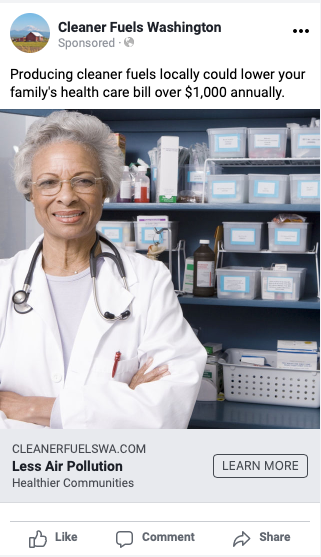
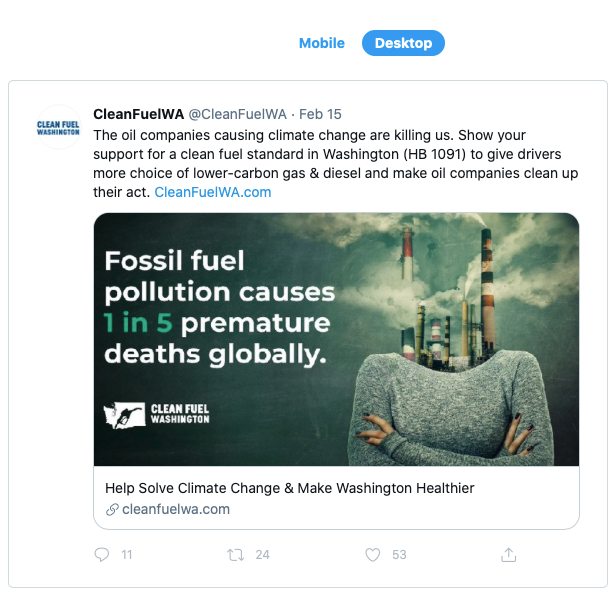
- Health & Justice communities near highways and industry suffering higher asthma rates and lower life expectancy, the pitch was cleaner air and environmental justice.
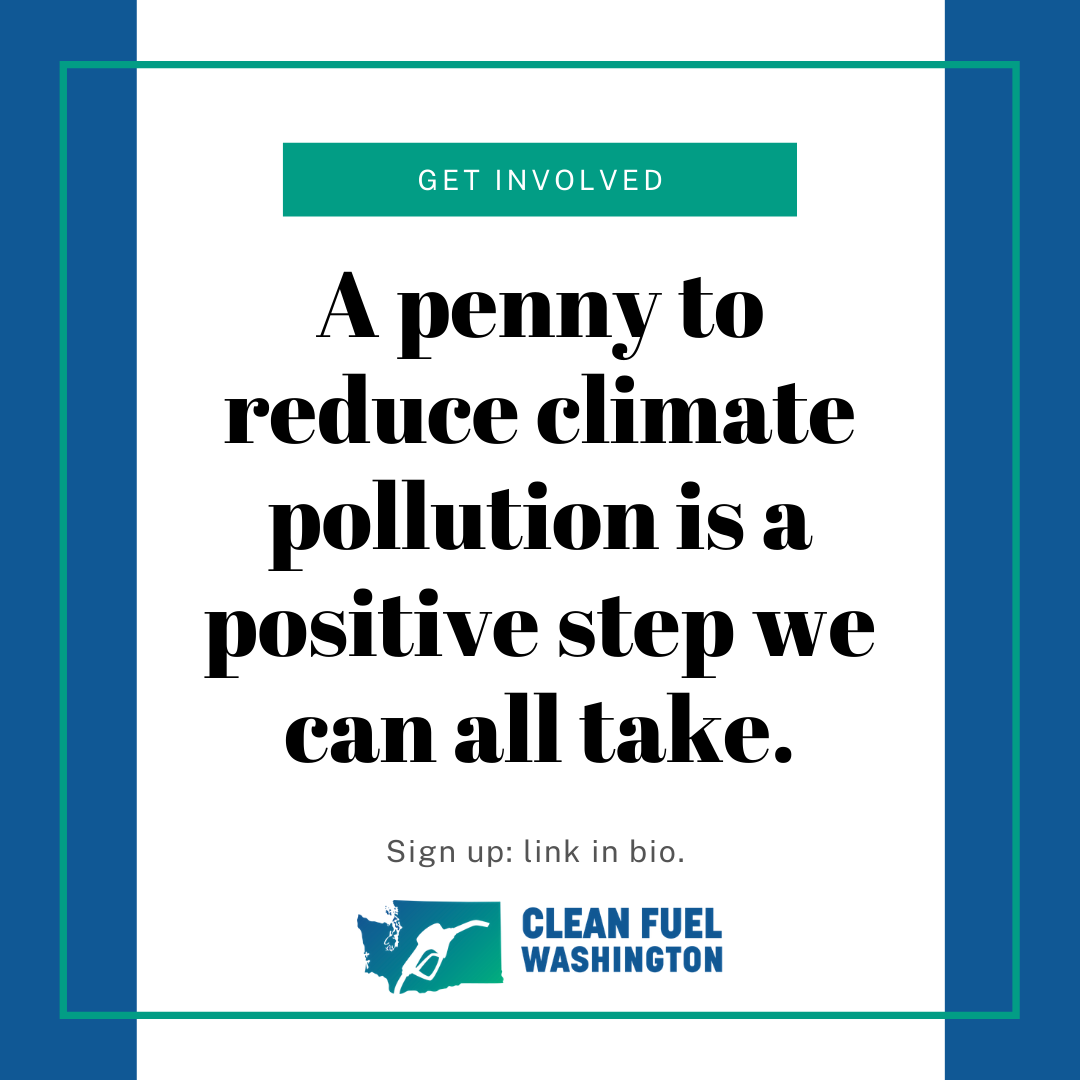
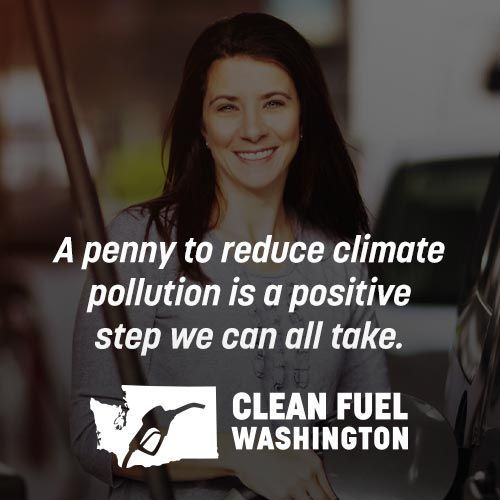
- Penny at the Pump: For voters worried about gas prices, the slogan "A penny at the pump" pre-empted Big Oil's usual playbook of ghoulish price predictions.
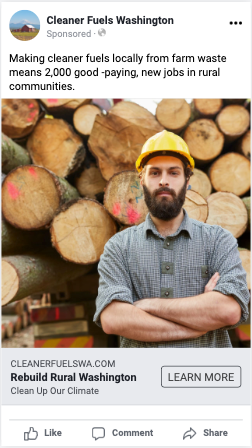
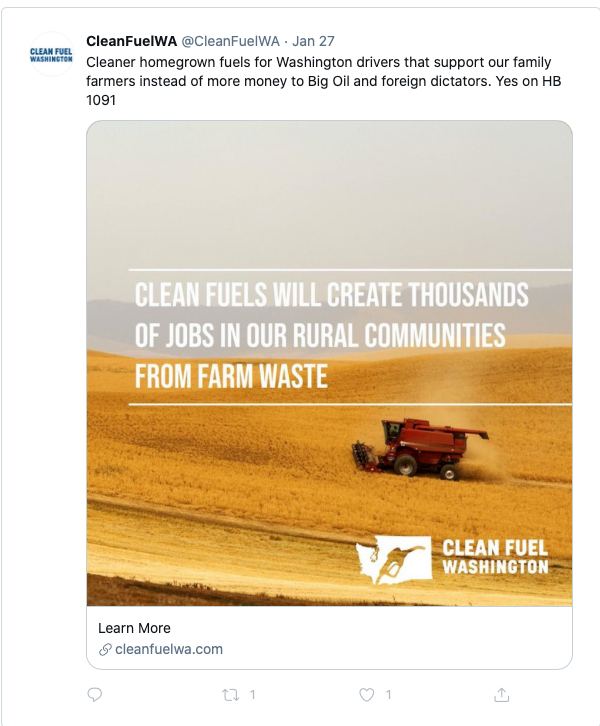
- Jobs & Economic Development: For rural districts, the debate was framed as a jobs and economic development strategy for people who would never be hired by Facebook or Google.
Digital Campaign
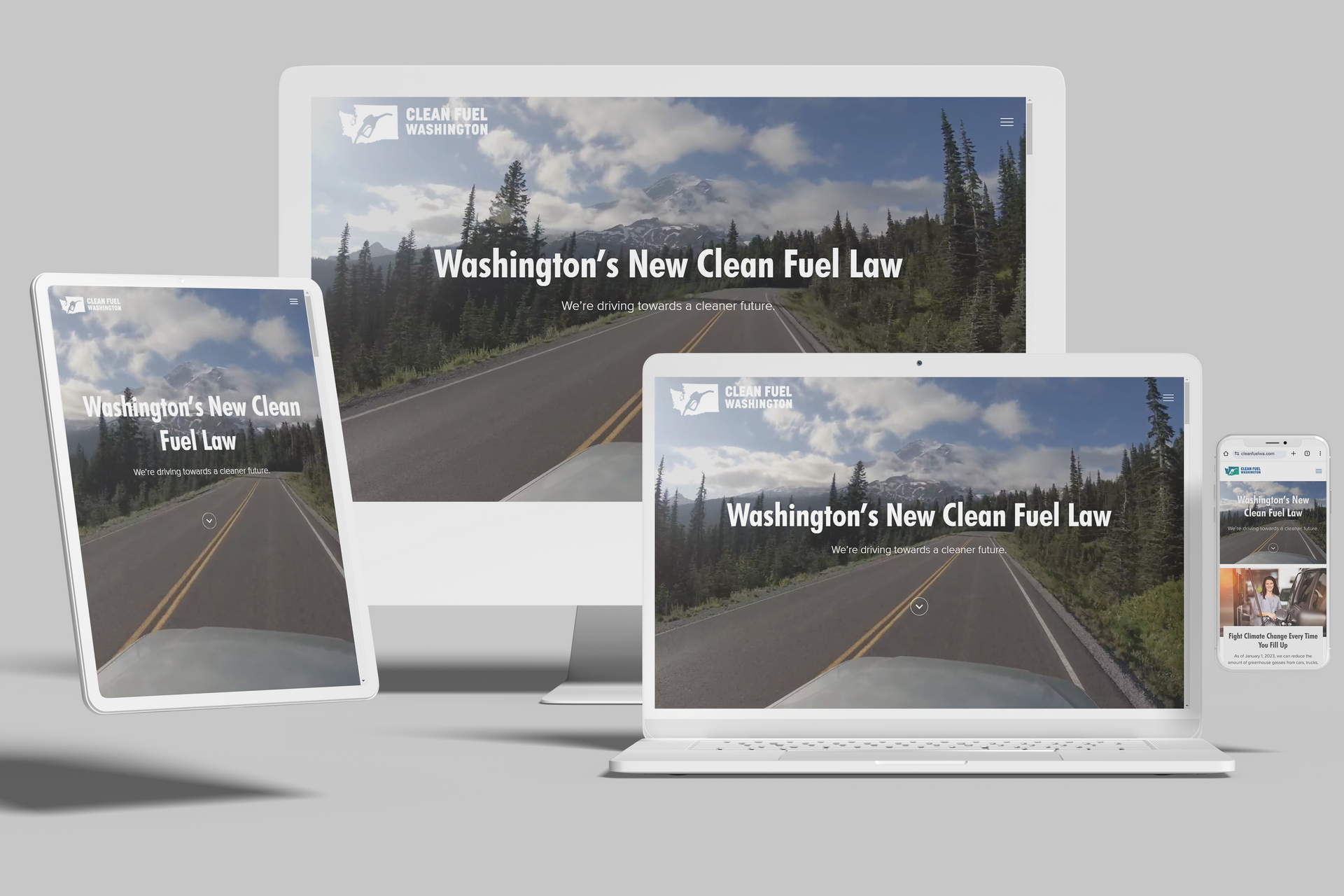
The website hammered home key messages, but unlike so many environmentally-based campaigns focused on the planet, this one focused on real people. An animated explainer video made the policy accessible, while well-sourced timeline charts showed the impact of California's similar legislation on jobs, gas prices, and fossil fuel reduction.
Social Media & Paid Advertising
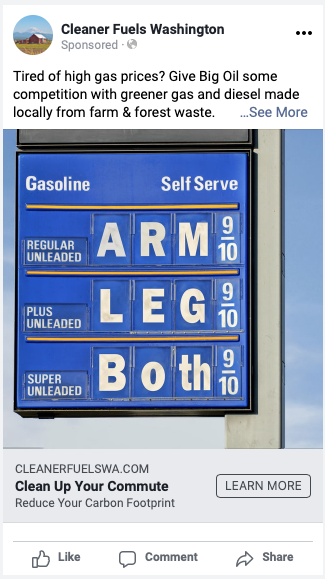
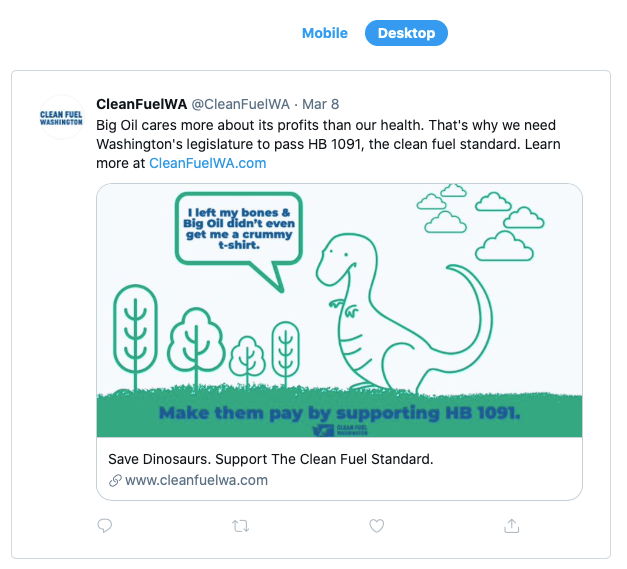
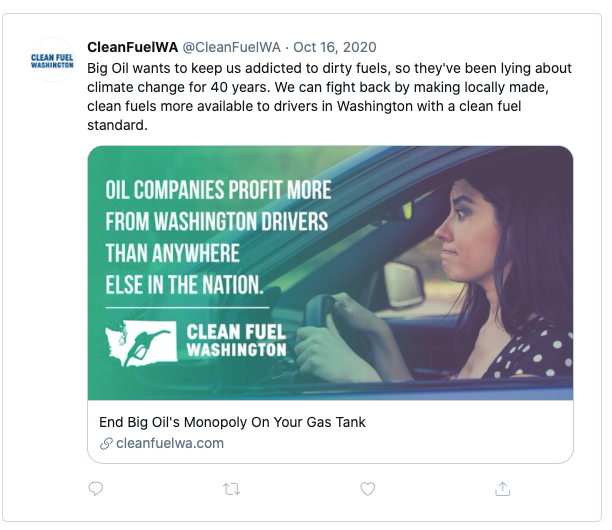
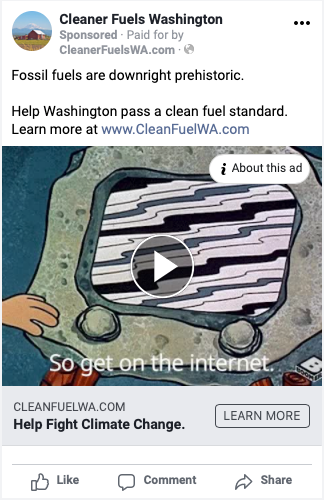
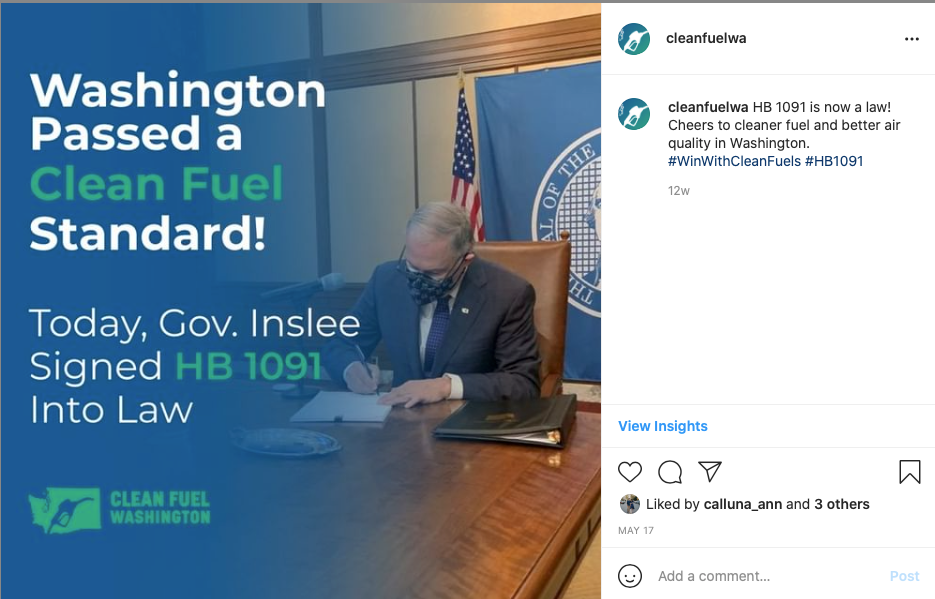
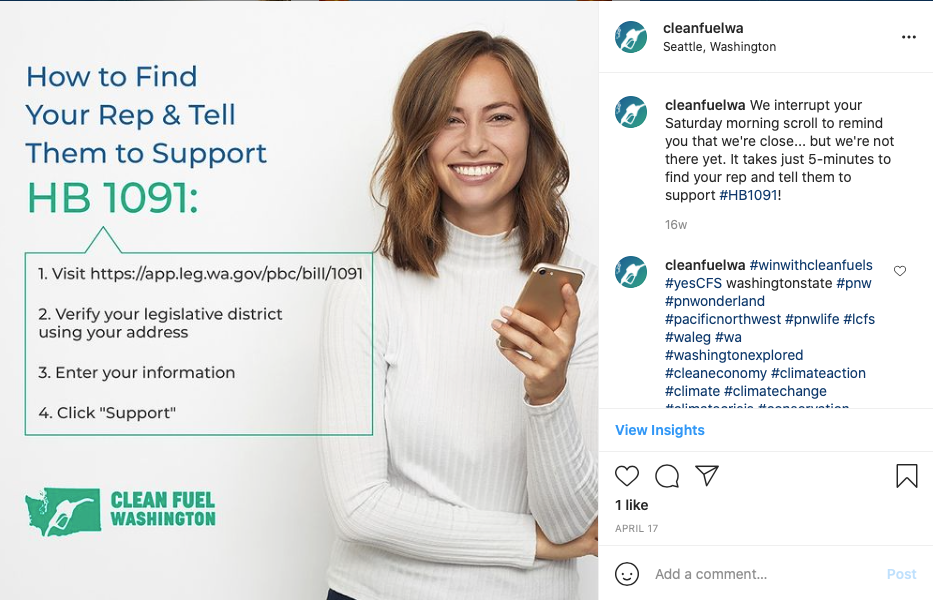
Campaigns on Twitter, Facebook, and Instagram had two objectives: build a grassroots base and counter Big Oil's industry front group that had successfully defeated environmental legislation for years. Targeted ads focused heavily on zip codes represented by wavering legislators, ensuring supporters would be their actual constituents. Search and display ads drove traffic to the website by targeting terms like "gas prices in Washington" and "greener gas and diesel."
Email Marketing
instead of unleashing a horde of angry voters upon their representatives, drip campaigns educated the audience about the policy and its benefits before ever asking them to take action. Thoughtful. Methodical. Effective.
Streaming Audio
Television ads in the expensive Seattle media market were out of reach, but targeted ads on Pandora and Spotify reached voters where they were already listening.
RESULTS
THE WIN!
In 2021, Washington State became the first state in America to approve a clean fuel standard via the legislative process.
Measurable Impact
Tracking polls showed the campaign moved voters 12 percentage points toward supporting the policy, and the 1,200 subscribers made their voices heard at the state capitol in a factual and credible way
The Ripple Effect
Today, Washington State is well on its way toward meeting its goal to reduce pollution in transportation fuels. And the success of this campaign has led to the introduction of similar bills in six other states