
Tie Your Brand To The Story We Share
Like millions of parents around the country, I took my daughter to college last week. It’s a bittersweet ritual that started when I let her hand go on her first day of kindergarten and is now complete. She has chosen a path, and it forevermore will diverge from mine.
I mention this not to remind you to offer me a Kleenex when you see me, but rather to share the connection and the emotional impact of a story that’s as old as homo sapiens have walked the planet.
- Child is born
- Child grows up
- Child leaves home
- The child starts a family of their own
Admittedly, not every story is that accessible or straightforward, yet because of that commonality, it took only eight words–I TOOK MY DAUGHTER TO COLLEGE LAST WEEK–to paint an entire mental picture for you.
What did you visualize? Is it a college campus full of life? A final hug? Tears on the drive home? Are you walking around an empty bedroom? Your own experience saying goodbye to your children or your parents?
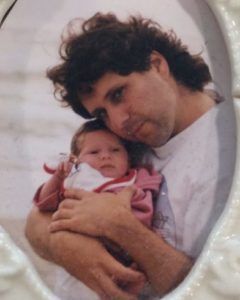
The days are long, but the years are short. The stories are what’s left.
Regardless of the image, we are now simpatico through our brains’ frontal lobe, where the amygdala and hippocampus reign supreme and the dopamine is dispensed. And because of how we react to that shared experience, you are likely to see me in a more positive framework–compassionate, empathetic, trustworthy– than you did before you read those eight words. I now get your benefit of the doubt, whether it’s an opinion of mine, a service I offer, a friend I introduce to you, or a favor I ask.
This personal connection is fundamental to all sales and brand building, but it’s something I see missing at all levels of American business today. They can’t answer the question for their audience, “Why should I care about you?”
To fill the void, brands fall back on facts, features, and benefits, like “We’re 20% better than the competition.” While those cost savings may indeed be valid, it’s a two-dimensional advantage. They’re just different sides of the same marketing coin. They don’t tell me why I should trust you, or why I should care about what you’re selling. Without an emotional base to support the claim, it’s just another commodity.
Imagine if I told you my daughter’s GPA or named the college she is attending without any prior context. Meaningful to you? Probably not, unless you happened to go to the same college and had a similar experience. Sharing that goodbye, on the other hand, was the emotional hook that made you want to know more about her.
Smart brands understand this. Mastercard can be used to purchase millions of items, but they chose to highlight the tickets purchased with their card for a father-son trip to watch a baseball game. Why? Because it’s an American ritual. They didn’t highlight cash rewards or discounts the customer receives when using the card.
For their latest ad, Google showed a dog hiding behind a piece of furniture while being quizzed about a box of missing treats as a pretext for conducting a Google search on dog training. If you’ve ever owned a dog, you’ve probably had a similar experience. As a result, the next time you use Google, your neurotransmitters will release a reward. They’ve created a cause-effect pattern in your brain going forward (until you learn about how much information they know about you).
So whether your business is B2B or B2C and you want to communicate to your targeted audience, first find the cultural totem familiar to them. If it connects, they’ll be more likely to hear the rest of your pitch and respond in the way you’d like.
PS. I guess that means if I did my job, you’d now be interested in hearing my pitch on how to base your marketing on your own unique story.
The post Tie Your Brand To The Story We Share appeared first on Michael's Marc.