
Branding Is About Cutting To The Flawless Center
The famed jeweler Harry Winston was such a stickler for perfection that after purchasing the 143-carat Star of Sierra Leone diamond, he announced he would cleave away the slight flaws and imperfections, which was a risky maneuver that caused apoplexy among diamond connoisseurs. Not easily deterred, Winston picked up his mallet and struck one of the largest gems of the world, and after the operation, he had a stone which was only one-fifth the size of the original, but because it was flawless, the value far surpassed that of the original rock. Metaphor translation: at the core of your bran is a unique and perfect center.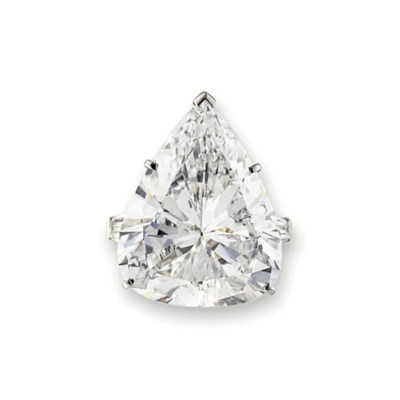
Cut To The Core To Find Your Brand
First, let’s start with what’s NOT at the core of your brand:
- What your company does to make money
- How you produce whatever it is you sell
- How long you’ve been in business
- Iconography
- A website or any marketing material
These are all things you do, but they aren’t the things that makeup who you are or why your customers choose you. Modes of operation change as does ownership and technologies. That’s why while some of these things might represent your brand, they will never be at the core of your brand.
So What’s A Brand?
Anyone can Google the term “brand,” but here’s how a few of the experts have defined it:
1. Branding is the art of aligning what you want people to think about your company with what people actually do think about your company. And vice-versa. Jay Baer
2. A brand is a reason to choose. Cheryl Burgess
3. Brand is the sum total of how someone perceives a particular organization. Branding is about shaping that perception. Ashley Friedlein
4. A brand is the set of expectations, memories, stories and relationships that, taken together, account for a consumer’s decision to choose one product or service over another. Seth Godin
While they use different words, you get the idea; it’s about what’s true, meaningful and distinct about your company and the perceptions people hold about it.
How Do I Figure Out My Brand?
This Venn Diagram demonstrates the integrated elements of a brand. If you’re not ready to hire a branding and marketing strategist, here are some questions you can ask your team to help you discover your core reason for being. 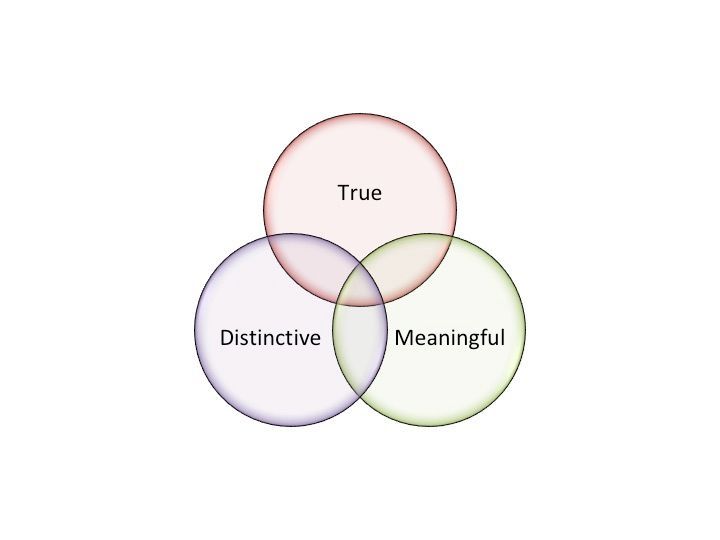
True To The Brand
- What is our mission?
- What is our vision?
- What are our core values?
- What’s our personification?
Meaningful To The Customer
- What are the functional benefits the customer gets from your product?
- What are the emotional benefits the customer feels when interacting with your company or product?
- What is it your customer is expressing about himself/herself by purchasing your product or working with your company?
Distinctive From The Competition
- What are the key factors customers use to distinguish businesses within the industry, i.e., price, exclusivity, quality, customer service, prestige, power, trust, etc.?
- What perceptions do your competitors own?
- What perceptions do you own?
Once you’ve answered all of those questions, see if you can keep chipping away at the slight flaws until you get down to most fundamental and valuable state in one sentence or less.
For example, Disney might value teamwork and customer service, but their core reason for being is using imagination to bring people happiness. As a consequence, everything they do puts creativity at the forefront, and that’s what millions have come to expect from the Disney brand. Yes, Disney produces movies, TV shows and runs theme parks, but that’s what they do. Their essence is about using the imaginary world to bring these things to life, and regardless of the format, Disney will always use imagination to make people happy.
When you’re ready, put your unique value proposition up against some of the most luminescent brands in the world. If you’re still confused or reaching a dead end, email me for a free 30-minute consultation, and we’ll see if we can make you shine.
The post Branding Is About Cutting To The Flawless Center appeared first on Michael's Marc.