The Most Common Messaging Mistake Cleantech Startups Make (and How to Fix It)
Michael Grossman • December 16, 2025
If you’re an early-stage cleantech founder, there’s a good chance your biggest obstacle isn’t technology, funding, or even policy. It’s confusion.
Investors don’t invest in what they don’t understand. Partners don’t commit to what they can’t explain. And customers don’t buy what they can’t remember.
The truth is, most cleantech startups struggle not because they lack a great story—but because everyone on the team is telling a different one.
The Cost of Confusion
Here’s how it usually happens.
The CEO leads with vision: “We’re building a next-generation platform to decarbonize industry.”
The CTO leads with tech: “We’ve developed a novel electrolysis process that increases hydrogen yield by 27%.”
The sales lead? They talk about market traction, maybe a pilot or a few early adopters.
Each version is true. But none of them ladder up to a unified story that investors or customers can instantly understand. The result? A confused audience, a scattered message, and a missed opportunity.
When investors can’t summarize your story in one sentence, they move on to the next pitch. When potential customers can’t tell how your solution applies to them, they click away. Clarity isn’t a “nice-to-have”—it’s your competitive edge.
The Problem: You’re Leading With What You Do, Not Why It Matters
Early-stage cleantech founders often fall into the same trap: they lead with how their technology works instead of why their solution matters.
It’s an understandable instinct—after all, your science is your pride. But your audience isn’t buying your chemistry. They’re buying your impact.
Investors want to know:
- What urgent problem are you solving?
- Why is your solution uniquely capable of solving it?
- Why does it matter now?
Your story isn’t about your technology—it’s about your customer’s transformation. You’re not the hero. Your customer (or the planet) is. You’re the guide who helps them overcome a critical obstacle with your solution.
That’s how a message becomes memorable—and investable.
The Fix: Build a Message-to-Market Framework
At Clean Up Marketing, we call this process your Message-to-Market Framework. It’s a proven structure that helps early-stage cleantech companies turn a fragmented story into a cohesive narrative that drives funding, traction, and growth.
Here’s how to start fixing the confusion:
1. Align on the Core Problem You Solve.
Every member of your team should be able to answer this question in the same way. Not in technical terms—but in plain English.
Example:
❌ “We use advanced plasma gasification to convert waste into hydrogen.”
✅ “We help waste companies meet city mandates to reduce their truck emissions by turning landfill waste into clean hydrogen.”
2. Clarify Who You’re For.
Too many founders try to appeal to everyone—investors, regulators, customers, media. Pick one audience to lead your story. The rest will follow once your message sticks.
3. Translate Tech Into Market Impact.
Every feature of your product should tie back to a business or social outcome—reduced emissions, lower operating costs, faster permitting, regulatory compliance. Those are the hooks your audience understands.
4. Make It Repeatable.
Your goal is to make your story so clear that anyone—an investor, a partner, even your intern—can tell it the same way, every time. Consistency builds credibility. Credibility builds trust.
The Payoff: Investor-Ready Messaging That Scales
When your story is clear and aligned, everything else clicks:
- Your pitch deck flows.
- Your website converts.
- Your team sounds unified.
- And investors lean in, not out.
As one of our clients put it after an Impact Story Sprint:
> “We didn’t just walk away with better messaging—we walked away with a shared language for how to talk about our company.”
Final Thought
Early-stage cleantech startups don’t fail because of bad technology. They fail because the world never understood what made their technology matter.
Your message is your bridge between innovation and impact. Build it clearly, and the right people will walk across.
Want to get your message investor-ready in 30 days?
Explore our Impact Story Sprint and learn how we help cleantech startups build unified, investor-ready narratives that connect clarity to capital.

Climate tech founders using AI for websites and pitch decks may not fully own what it creates. Here’s what to know before you hit Generate.

Selling complex technology takes more than academic rigor. Founders need the relationship skills from high school to win over investors and customers.

When your market has dozens, not thousands, of potential customers, conventional GTM tactics break down. Learn how to market when every prospect matters.

Labor Day traditionally means the start of political campaign season.

PitchBook’s Q2 2026 data confirms what climate tech investors value: affordability, reliability, resilience and energy independence. Make those benefits your message.

Align marketing and sales around a clear message that helps risk-averse customers understand your complex technology and make the case for change.
America Connects is the data center industry's answer to entrenched public opposition. Before the campaign expands, here's some unsolicited advice.

Climate and deep tech companies sell optimism. Learn why a dark website can make investors and customers hesitate before they read a word.
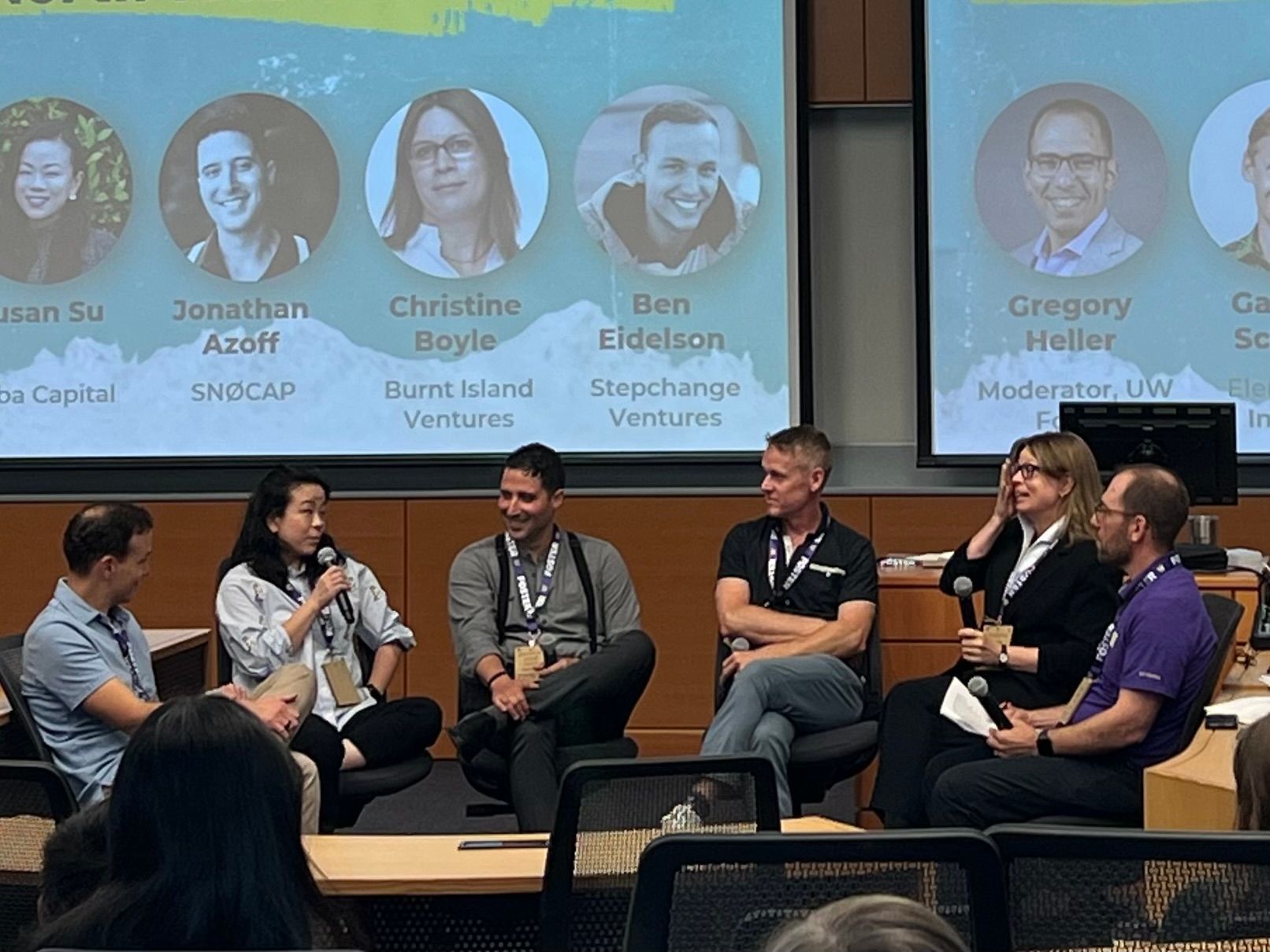
Venture capital is more concentrated than ever. Learn why investor attention has become scarce and how it changes the way investors review pitch decks.