
Cleantech Category Leadership: Become the Reference Point, Not the Alternative
Michael Grossman • April 19, 2026
The companies that get funded are the ones everyone gets compared to.
Since Gilligan’s Island
premiered on Gilligan's Island in 1964, more than thirty television series have been set on remote islands. Some were dramas, others reality shows, and many had production budgets far larger than the original sitcom.
Yet almost every one of them has been described at some point as “the Gilligan’s Island of…”
The comparison shows up in conversations about shows like Lost or Survivor, and even in films like Cast Away.
That raises a useful question.
Why would television shows with bigger budgets, modern production techniques, and entirely different casts still be compared to a low-budget sitcom from the 1960s?
Because Gilligan’s Island
became the reference point for an entire genre.
When people encounter a story about strangers stranded on a remote island, their mental shortcut still points back to that show.
The same dynamic shows up in business.
Why “Better, Faster, Cheaper” Locks You Inside Someone Else’s Frame
In every industry, one brand eventually becomes the shorthand for the category.
People don’t ask for a facial tissue. They ask for Kleenex.
They don’t make a copy. They Xerox it.
They don’t search the internet. They Google it.
Each of those companies reached a position where the brand name itself became a cultural shortcut for the entire product category.
The companies that last in cleantech are not the ones with slightly better technology. They are the ones that become the reference point for the entire category.
That distinction matters because most early-stage climate companies position themselves around performance comparisons.
Their solution is:
• More efficient
• Lower cost
• Faster to deploy
• More scalable
Those claims may be accurate, but they place the company inside an existing frame. They signal improvement, not leadership.
And improvements can be overtaken.
Disruption happens repeatedly. Each wave of technology eventually gives way to the next. The only lasting brand is the one that becomes the category’s reference point.
The Companies That Stick Rewrite How the Problem Is Understood
History is full of examples:
Before the Nest Thermostat, thermostats were commodity hardware. They sat on the wall, followed a schedule, and rarely entered the conversation unless they broke. Nest Labs didn’t win by claiming marginal improvements. It changed how people understood the problem. Energy use inside the home became something that could be monitored, learned, and adjusted in real time. For years, homeowners didn’t ask whether a house had a smart thermostat. They asked if it had a Nest. The company didn’t outperform the category. It became the reference point for it.
The same could be said of Tesla, Salesforce, or Ring video doorbells.
The same pattern is emerging in climate technology today. Labs across the world are producing new approaches to:
• Biodegradable materials
• Carbon removal
• Energy storage
• Water reuse
• Industrial decarbonization
Many of these technologies will work. A handful will scale. Even fewer will become the default solution that the rest of the industry measures itself against.
Those companies will not win solely because their technology performs well. They will win because their story is easy to understand and easy to repeat.
If An Investor Or Pilot Partner Has to Work to Understand You, You’re Already Losing
The hidden strength of Gilligan’s Island were the archetypal characters.
The professor.
The movie star.
The millionaire.
The farm girl.
The ship captain.
The audience didn’t need a long explanation to understand who these people were or why they behaved the way they did. Within minutes, viewers understood the situation and the stakes.
The show’s weekly plot lines were simple, predictable, and sometimes absurd. But the audience knew exactly what kind of story they were about to watch.
Clarity created familiarity. Familiarity created staying power.
Technology companies face the same challenge.
The harder you make your audience work to understand your solution, the less likely they are to stay for the entire episode. Customers, investors, and partners do not have time to decode complex explanations about how your technology works. They are scanning for one simple signal:
Is this the solution to the problem we already know we have?
When your message makes that answer obvious, the story spreads naturally. And when the story spreads, your brand becomes the reference point others are forced to acknowledge.
That is the real goal of category leadership.
Not to be slightly better.
Not to be incrementally faster.
In every industry, one brand becomes the shorthand for the category. If your cleantech company succeeds, someday people will describe other technologies as “the [your company] of…” And that is when you know you’ve won.

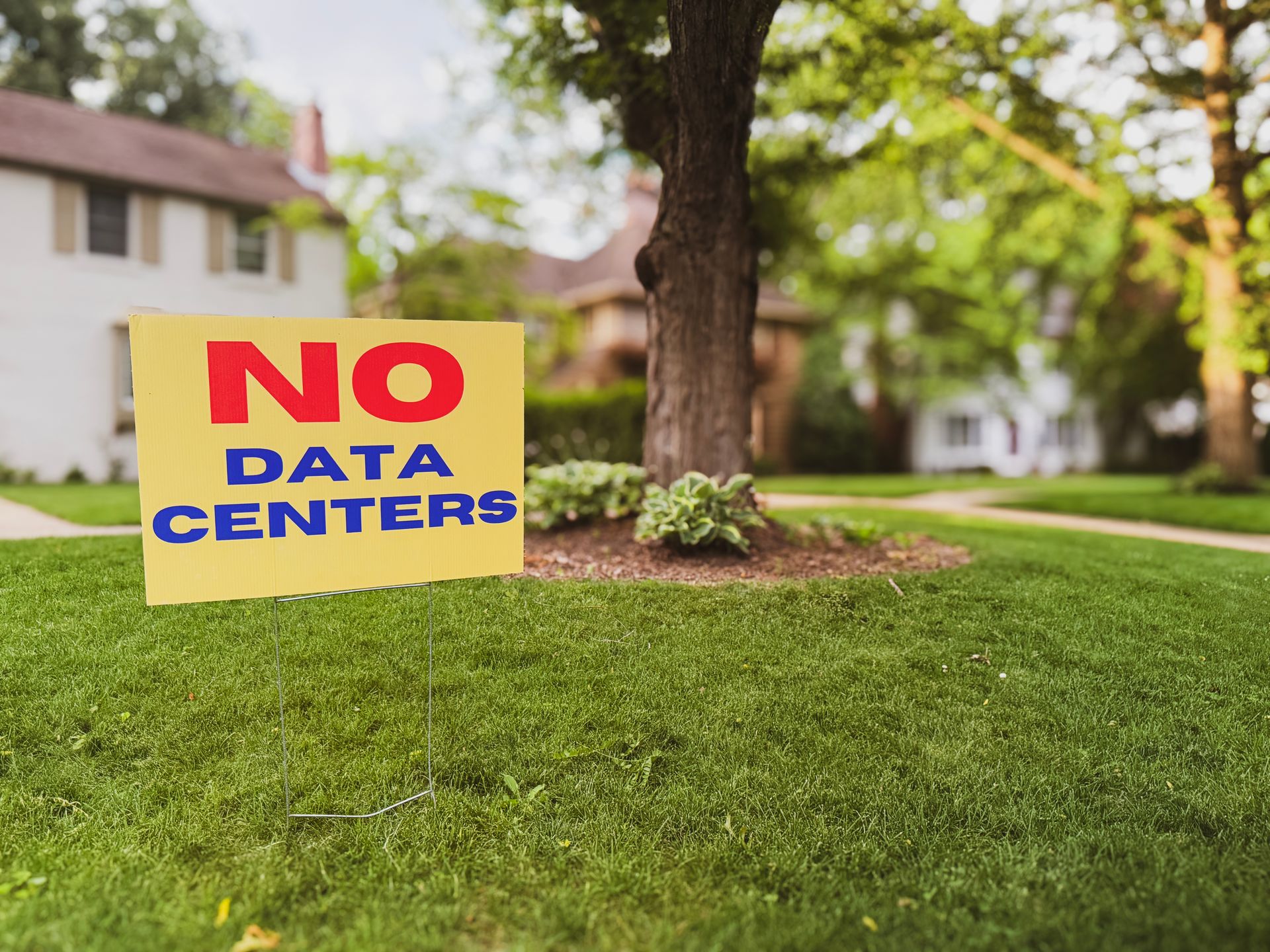
Clean energy developers do not lose projects because their technology fails. They lose projects because they misunderstand how decisions get made in the communities where those projects are proposed. If you spend enough time around project development, you start to see the same pattern. A site pencils. The resource is there. Interconnection works. Capital is lined up. Then the project enters the public process and something shifts. Opposition forms. Local officials hesitate. The project stalls or disappears. That outcome is not rare. Roughly one out of every three large clean energy projects in the United States never reaches construction . At the same time, the environment around these projects is getting harder. Research from the Sabin Center for Climate Change Law at Columbia University tracks hundreds of renewable energy projects across dozens of states facing organized opposition, along with a growing number of local laws restricting development. Across the country, local resistance is no longer episodic. It is structural. Most developers respond by trying to improve how they explain their projects. That is not where the problem sits. The most common messaging mistake clean energy developers make is this: They treat communication as explanation when it is actually coalition building. The Illusion Of Stakeholder Engagement Developers often approach communication by identifying “stakeholders” and building a plan to engage them. The list is familiar. Elected officials, regulators, adjacent landowners, business groups. Those people matter, but they are not the community. Communities are not organized through formal roles. They are organized through trust . Influence sits with people who do not appear on stakeholder maps. A pastor, a co-op manager, a respected farmer, a small business owner. These are the people others listen to when they are deciding what a project means. When engagement is limited to formal stakeholders, developers miss the informal networks where opinions actually form. That gap is where opposition gains ground. Developers Try To Be The Messenger Even when developers engage early, they often assume they should be the ones delivering the message. They have the data. They understand the project. They can explain the benefits. That logic makes sense internally. It is less effective externally. People trust those who share their lived experience . A developer entering from outside the community is asking for trust before it exists. A local voice does not need to make that same ask. This is not a communications nuance. It is the difference between being heard and being discounted. Projects that move forward tend to have credible local voices who can explain the project in terms that make sense to their neighbors. Projects that fail often rely on the developer to carry that burden alone. What is actually at stake These dynamics are easy to underestimate because they are not reflected in financial models. A utility-scale wind or solar project in the 50 to 100 megawatt range typically requires $75 million to $200 million in upfront capital, depending on technology, location, and interconnection costs. Over a 20 to 30 year lifespan, those projects can generate hundreds of millions of dollars in contracted revenue, particularly when backed by long-term power purchase agreements. When a project fails at the permitting stage, that capital is not redeployed cleanly. Time is lost. Development costs are written off. Market windows close. This is not a marginal issue. It is a core risk to the business model. The New Pressure: Data Centers The stakes are rising because demand is rising. The rapid growth of artificial intelligence and cloud computing is driving a surge in data center development across the United States. These facilities require enormous and continuous electricity loads. Recent analysis from Pew Research Center notes that data center electricity consumption in the U.S. is expected to increase significantly as AI adoption expands, placing new pressure on regional grids. At the same time, research from Columbia Business School highlights a growing race to secure power for these facilities, with developers competing for access to clean and reliable electricity. Additional analysis from Environmental and Energy Study Institute warns that data center demand is already reshaping grid planning and could complicate climate goals if new supply does not come online fast enough. This creates a collision. On one side, data center developers need large volumes of electricity, increasingly from low-carbon sources. On the other, local opposition is making it harder to build the very projects required to meet that demand. The result is a tightening constraint on both infrastructure and timelines. Coalition Building As A Development Function In this environment, coalition building is not a communications add-on. It is a core development function. Projects that succeed tend to follow a different sequence. They identify credible local voices early. They invest time in understanding how the project intersects with local concerns. They allow the community to shape how the project is discussed rather than introducing a fully formed narrative late in the process. This work often happens before a project is publicly announced. It rarely appears in investor updates. It is difficult to quantify. It is also one of the clearest predictors of whether a project moves forward. A Different Way To Think About Messaging If you treat messaging as explanation, your goal is clarity. You want people to understand what the project is and why it matters. If you treat messaging as coalition building, your goal is different. You are working to ensure that when the project becomes public, there are already trusted voices within the community who understand it, can speak to it, and see a place for it. That shift changes everything. It changes who speaks. It changes when conversations begin. It changes how opposition is received. The Broader Implication The clean energy transition is often framed as a technological and financial challenge. Those elements matter. Progress on both has been significant. At the same time, the growing number of local restrictions, the scale of organized opposition, and the surge in electricity demand from data centers point to a different constraint. The limiting factor is not always whether a project can be built. It is whether a community is prepared to accept it. Developers who recognize that early and build coalitions accordingly get projects built. Developers who do not often find themselves trying to explain a project after the decision has already been made.

The Quiet Crisis in Clean Energy Development The United States is experiencing a permitting crisis for renewable energy projects. Between 2018 and 2023, roughly 30% of utility-scale wind and solar projects were canceled during the siting process, often because of local opposition or zoning restrictions. At the same time, opposition is spreading rapidly across the country. Researchers tracking renewable project conflicts have documented: • 498 contested renewable projects across 49 states • 459 counties and municipalities with severe restrictions on renewable development In other words, the challenge facing clean energy deployment is not primarily technological. It is political and social. When a Wind Project Dies Last week, a county commission in Washington State placed a moratorium on new wind energy development. That decision effectively halted the Harvest Hills Wind Project, a project proposed by Vestas, one of the most experienced wind companies in the world. The turbines themselves were not controversial from an engineering standpoint. Wind power is now one of the most mature energy technologies in the global power system. Yet the project still collapsed. The reason lies in the way public opinion forms around infrastructure projects. The New Reality of Local Politics Developers now operate in a communications environment where information spreads instantly and credibility is fragmented. Anyone with a social media account can claim expertise. Algorithms amplify outrage. And misinformation circulates faster than technical explanations. Even claims that wind turbines cause cancer — a theory repeatedly debunked by medical researchers — continue to appear in local debates. Once that narrative spreads within a community, the formal permitting process often becomes the stage for a conflict that has already been decided informally. Why the Old Engagement Model Fails The traditional developer playbook looks transparent on paper: 1. Announce the project 2. Launch a website with a project overview and FAQ 3. Invite residents to public meetings But when residents encounter the project for the first time through zoning notices or political social media posts, the project feels imposed rather than understood. By the time formal stakeholder engagement begins, the conversation often starts from mistrust. Farmers Understand the Problem Most wind and solar projects are located in rural areas. Farmers in those communities know something developers sometimes overlook: You prepare the soil before planting the seed. A farmer who plants before the soil is ready wastes the crop. Community engagement works the same way. If developers wait until a project is announced to begin outreach, the ground is already hardened. Grassroots Outreach Is Cheap Insurance Large energy projects often cost hundreds of millions of dollars, yet communications budgets for those projects are frequently minimal. True grassroots outreach typically costs less than one percent of project value, yet it can determine whether the project survives local politics. That outreach must reach residents where they already gather online: • Pre-roll ads on YouTube • Facebook and Instagram • Twitter/X (yes, even Twitter, because it's still a home for political junkies) • Streaming audio like Spotify and Pandora These platforms allow developers to communicate long before the permitting process begins. Projects Are About People Most renewable project websites emphasize infrastructure. Turbine height. Generation capacity. Interconnection details. Tax base. Those facts matter, but they rarely build trust. Communities want to know something simpler: How does this benefit me? Who in our community supports this? In rural areas, credibility travels through relationships. Residents trust farmers, business owners, and local leaders far more than corporate statements. A project website dominated by technical diagrams tells one story. A project website featuring community voices tells another. A Model That Worked Washington State’s Clean Fuel Standard faced intense opposition from the oil industry, but the policy ultimately passed because our team built a broad coalition before the final legislative fight began. That coalition included communities environmental campaigns often overlook: timber workers, minority businesses, and farmers, who were often the target of oil industry hysterics about gas prices. We spent months educating those communities before asking them to take action. When the opposition campaign intensified, the coalition already existed. The Future of Project Development Clean energy developers have historically thought of themselves as engineering organizations. In today’s political environment, they must also think like community organizers. That means: • Beginning outreach before project announcements • Engaging entire communities, not just formal stakeholders • Communicating through digital channels where residents already gather • Elevating trusted local voices The energy transition depends on infrastructure. But infrastructure ultimately depends on trust.