

The Medium Is The Message
Michael Grossman • April 25, 2026
Why Scientists And Engineers Have Such Difficulty Explaining Their Cleantech Solutions

I’m often asked why it’s so hard for some of the smartest people in the world to communicate their ideas. A book I’ve been reading, Stolen Focus, sheds some light on the reasons.
Cleantech Founders Are Trained Differently
In school (K-12, undergraduate, post-graduate), reading is a requirement for learning, and historically, the main source of that information came from books that were read linearly and required (often) hours of focus to understand.
If you’re a PhD, that means you’ve spent your entire childhood, adolescence, and early adulthood consuming information in a certain way. By the time you’re 25 or 30, your brain is hardwired to absorb and share information a certain way.
Deep concentration and focus are central to how neurons in your brain piece together that information and create new neural pathways that lead to scientific and engineering breakthroughs.
But once you leave academia or the lab, you step into a world that doesn’t consume your solutions in the same way.
It’s no secret that Americans don’t read. One large study showed that 57% of Americans don’t read a single book in a year,
and by 2017, the average American spent only 17 minutes per day reading a book, but 5.4 hours on their phones.
That number has become even more skewed over the last decade.
Your Audience Of Cleantech Investors & Customers Reads From Screens
Anne Mangen, a professor of literacy at the University of Stavanger in Norway, has been researching reading comprehension for over two decades. Reading from screens, she discovered, trains us to read differently—in a manic skip-and-jump, from one thing to the next.
“We run our eyes rapidly over the information to extract what we need,” she concluded.
Screen Inferiority
In one study, Mangen split people into two groups: one group was given information from a printed book, and the other was given the same information on a screen.
When asked to recall what they read, there was a large gap between the book readers and the screen readers. Fifty-four studies have revealed that the gap between books and screens
is big enough that, in elementary school children, it’s the equivalent of two-thirds of a year’s growth in reading comprehension.
Researchers have a term for this: screen inferiority
Why Does Screen Inferiority Matter To Cleantech Founders
According to Docsend, a partner at a VC will spend less than three minutes reviewing your pitch deck
on a computer screen. When she visits your website, she will scan the homepage, where the average viewer will spend 54 seconds before moving on.
The same principle applies to your LinkedIn post, your newsletter, or your explainer video. How much information do you expect her to remember once she moves on to the next thing in her day?
Potential pilot partners and customers are no different. You can leave your slide deck after the meeting, but just like you, they have a dozen other issues occupying their brain space. Yet you’re expecting them to carry your message through their corporate hierarchy, including all of the technical details you packed onto 25 slides?
(H2) How Cleantech Founders Can Overcome Atrophying Attentions
While it’s tempting to shake your fists at the gods of Google, Meta, and Apple for successfully hijacking our attention spans for their profit, it’s not going to get you any closer to closing your Series A round (or any round for that matter) or convincing a pilot partner to help prove your technology.
If you want your audience to commit it to memory, you need to clear away all of the jargon
and remove the complexity from your climate tech.
Some will dismiss this as reductive advice, but your audience is much more likely to remember a single takeaway that changes their world for the better, whether that’s a higher profit margin, meeting new regulations, or lowering costs.
Few people recall that Edison used carbon filaments in his original light bulb. They remember that for the first time in human history, they could see, read, and cook at night.
The science used to build the first atomic bomb is elusive to most people, but they do know what a mushroom cloud looks like and the devastation it left in its wake in Hiroshima and Nagasaki.
I could go on and on with the technological innovation of the 20th century: the radio, the television, the cellular phone, and yes, the internet. Asking people to recall how they were created and what’s inside the box is a fool’s errand, but they all can tell you how it changed their lives.
(H2) Tailor Your Cleantech Message To The Medium
Your invention is impressive. Your peers at the DOE and ARPA-E say so. The United States Patent Office says so. But they aren’t putting their jobs at risk or their personal money on the line to bring your technology to market. And they aren’t making decisions based on your pitch deck or your website. More importantly, they were trained to learn the same way you were.
Then there’s the rest of us—distracted, unfocused, and addicted to the affirmations Big Tech serves us to keep us hooked to the surveillance economy.
If you want their undivided attention, you have to speak as they scroll. They are going to pick out the things that yank on their emotions.
You’ll get a “like” when you tell them you feel their pain
You’ll get engagement when they learn your solution can ease their emotional/financial burden
They will even stop scrolling momentarily when you explain how you make them money or solve their regulatory problem.
And before they look away, you need to tell them what to do next, in this case, book a second meeting when you’ll have to repeat Steps 1-3 because nothing captures attention on a screen for long except a cat playing piano.

Climate tech founders using AI for websites and pitch decks may not fully own what it creates. Here’s what to know before you hit Generate.

Selling complex technology takes more than academic rigor. Founders need the relationship skills from high school to win over investors and customers.

When your market has dozens, not thousands, of potential customers, conventional GTM tactics break down. Learn how to market when every prospect matters.
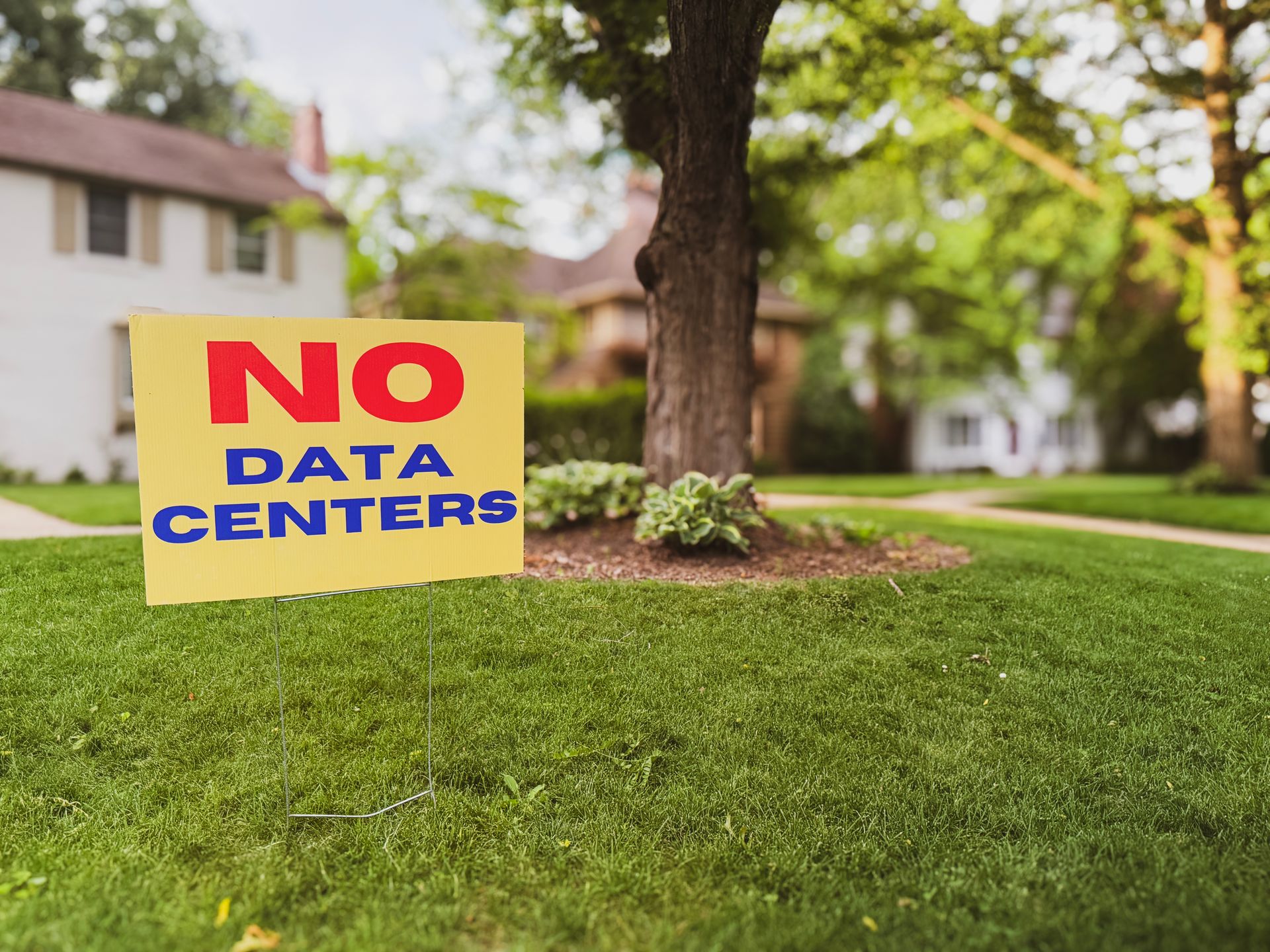
Labor Day traditionally means the start of political campaign season.

PitchBook’s Q2 2026 data confirms what climate tech investors value: affordability, reliability, resilience and energy independence. Make those benefits your message.

Align marketing and sales around a clear message that helps risk-averse customers understand your complex technology and make the case for change.

America Connects is the data center industry's answer to entrenched public opposition. Before the campaign expands, here's some unsolicited advice.

Climate and deep tech companies sell optimism. Learn why a dark website can make investors and customers hesitate before they read a word.
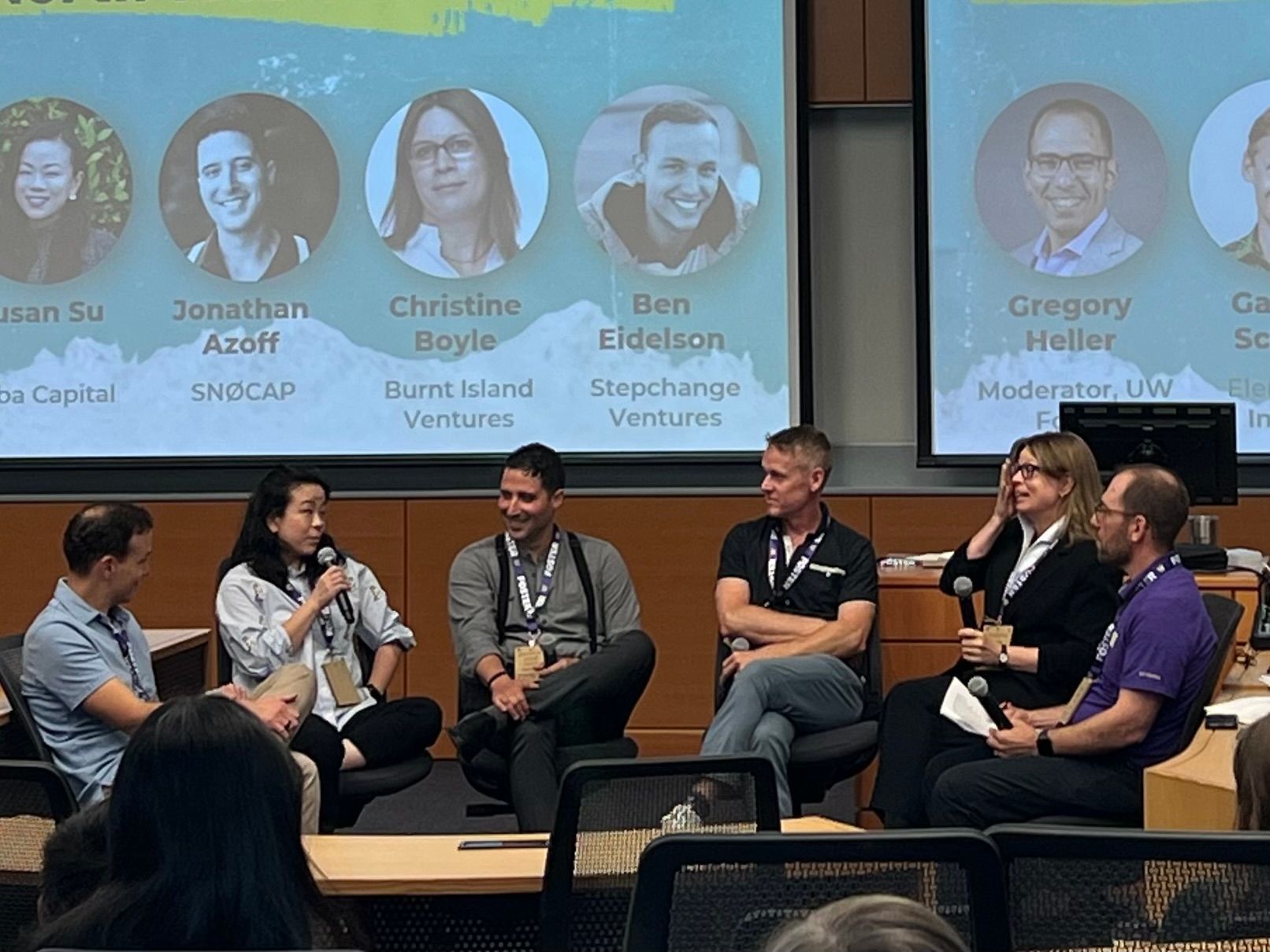
Venture capital is more concentrated than ever. Learn why investor attention has become scarce and how it changes the way investors review pitch decks.