

AI Produces Familiar Marketing. Cleantech Needs Something New.
Michael Grossman • March 23, 2026
Claude, Gemini, and Chat GPT walk into a bar.
The bartender asks Claude, “What’ll you have?” Claude says, “Mix me your most popular drink.”
Then he asks Gemini, “What can I get you?” Gemini says, “Open a beer bottle with a steel opener, pour it in a tall glass, and leave exactly a half-inch of foam, exactly how the instructions tell you how a beer should look.”
Finally, he asks Chat GPT what it wants, and Chat GPT answers, “Pour their two drinks together, and call me an ambulance because there’s a 78% chance I’ll contract alcohol poisoning and need to have my stomach pumped. Tell the doctors to gather around and decide what the best course of action will be.”
Flat. Aggregated. Common. That’s what you get when your company outsources its voice to AI.
It’s correct. It’s sensible. But is it as original as the science and engineering behind your cleantech company?
The beauty of AI is that it’s collected all knowledge since the dawn of time, which is why it can defeat a grand master at chess, and retrieve the most arcane facts in the world.
But when it comes to writing copy, it pulls you to the mean, the average. And average won’t cut it in cleantech when funding is tight and policy winds are shifting against us.
It’s possible to train your AI to become your in-house marketing clearinghouse, but first you’d need to know how to train it to spit out something that’s as original as your IP. That’s the equivalent of a first year chemistry student knowing what you know about inorganic chemistry after working in the field for 20 years.
If you asked AI to tell you how to capture CO2 and turn it into cement, you would get diagrams of mineralization, injection, and electrochemical processes, but what it can’t tell you is why a company that’s been making cement the same way for a century is going to throw it out the window to adopt your technology, or pinpoint your buyer profile and why they are going to become your advocate.
Where AI falls down is the buying process because it doesn’t understand emotions and how they drive your go to market strategy. What you get is boilerplate.
Here’s what others have done and what’s worked…so do that. Like our legal system, it’s totally reliant on precedent…at least it is in 2026.
That might work if you’re recreating something, but you’re not. You’re inventing something, and your marketing language should reflect that in your investor decks, websites, videos, sales sheets, and content.
You can ask AI to write your website because funding is tight for early stage companies, and it will spit out properly search engine optimized headlines to attract Google’s algorithm. But will it keep the interest of a potential investor who's seen the exact same verbiage on your competitor’s website?
That’s the crux of the problem of over reliance on AI. Factually accurate, and step by step directions, but also a paint by numbers visual that is unremarkable and identical to the advice its given countless others.

Climate tech founders using AI for websites and pitch decks may not fully own what it creates. Here’s what to know before you hit Generate.

Selling complex technology takes more than academic rigor. Founders need the relationship skills from high school to win over investors and customers.

When your market has dozens, not thousands, of potential customers, conventional GTM tactics break down. Learn how to market when every prospect matters.

Labor Day traditionally means the start of political campaign season.

PitchBook’s Q2 2026 data confirms what climate tech investors value: affordability, reliability, resilience and energy independence. Make those benefits your message.

Align marketing and sales around a clear message that helps risk-averse customers understand your complex technology and make the case for change.

America Connects is the data center industry's answer to entrenched public opposition. Before the campaign expands, here's some unsolicited advice.

Climate and deep tech companies sell optimism. Learn why a dark website can make investors and customers hesitate before they read a word.
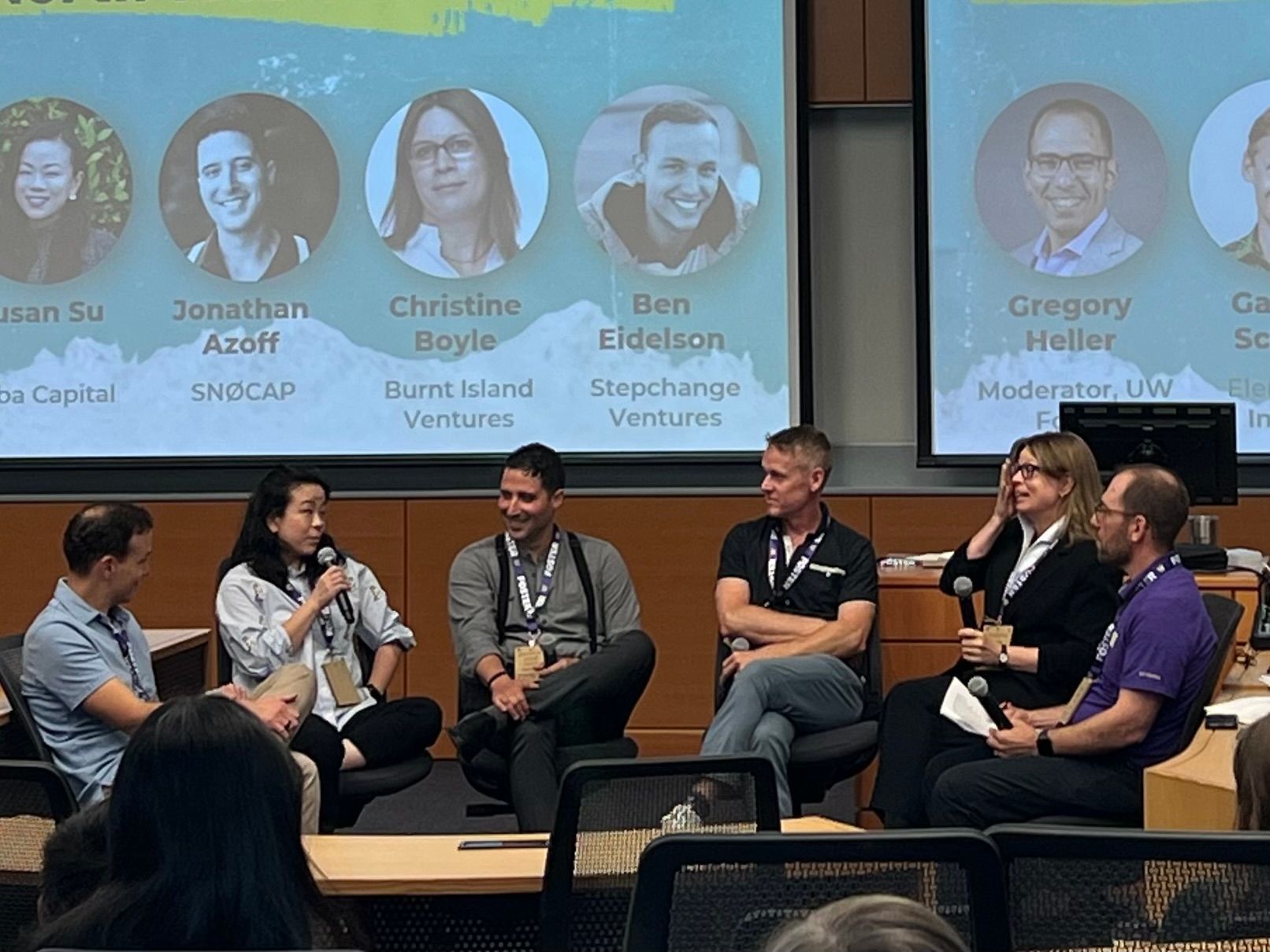
Venture capital is more concentrated than ever. Learn why investor attention has become scarce and how it changes the way investors review pitch decks.