As Goes Denmark...
Michael Grossman • March 30, 2026
A funny thing happened on the way to decarbonization.
But a funny thing happened on the way to net zero. Denmark, one of the world's greenest nations, is experiencing a backlash
against utility-scale solar energy.
What is Jernmarker?
Jernmarker, or iron fields, was chosen as the Danish word of the year in 2025 after the solar backlash swayed municipal elections and prompted some councils to pull projects.
While solar energy makes up a small percentage of Denmark’s overall 90% renewable power mix, it has tripled its power production
over the last four years.
Opponents of Denmark’s “fields of iron” tell a tale that’s eerily familiar to what solar, wind, battery storage, and biogas developers are up against in the U.S.:
• Rural communities are overrun by an industrial sprawl at the behest of urban elites.
• Photovoltaic panels are ugly, destroy nature, and deflate property values in disenfranchised communities.
• Drone shots of encircled farmhouses have become a symbol of the nation’s urban-rural divide.
Unlike some American conspiracy traffickers, the Danish opposition to renewables doesn’t reflexively oppose green energy, but the question remains: if clean energy developers are struggling to win the support of local communities in the most climate-conscious country, how will projects get permitted and built in a nation like ours that still has a sizeable constituency that doesn’t believe climate change is real?
The Urban-Rural Divide Is Alive And Well
Developers would be smart to approach each project with the working assumption that utility-scale solar panels, wind turbines, data centers, and battery energy storage systems have become a symbol of a political elite that wants a green transition and doesn’t care about what happens to the countryside because that’s not where they live.
Urban-rural tensions have been ingrained in Americans’ collective consciousness since the nation’s founding, which is why outside developers, as the main messenger for a clean energy project, face an uphill battle for trust.
A project that wants to overcome those ingrained biases can’t be launched when the press release announces the project to the local media. It requires months of spade work to find allies and trust messengers in a local community that transcends “stakeholder outreach” or a web page containing frequently asked questions that no one will read.
Houston Doesn't Have A Technology Problem
Solar panels and wind turbines rarely fail before end-of-life. This is not a technology or engineering problem.
If we want to deploy gigawatts of clean energy to the grid, developers need a model that uses local, trusted voices who can articulate local benefits for the inconvenience rural communities face in exchange for a greater good.
Case Study: How Dairy Digesters Are Winning Over Rural America
We worked with a dairy digester developer/builder/operator for many years, and that industry is ahead of the renewable curve when it comes to community outreach.
Digester builders face a culturally conservative, rural audience that’s skeptical about climate change. On top of that, developers were asking farmers to sacrifice valuable land in order to build a multi-million-dollar industrial behemoth that they didn’t know how to operate.
So, how have over 300 dairy digesters been built in the U.S. despite some early mishaps? Trust and tangible benefits. Developers will often fly farmers for site visits to running digester projects to “kick the tires” and talk to their farming colleagues.
It also helped the case that capturing methane and turning it into biogas to sell to the local utility guaranteed a steady paycheck in a volatile industry.
And yes, there’s a cultural component that incentivized these projects, too. Farmers who want to pass down the family business to future generations now have a more sustainable financial model.
There's A Playbook For Clean Energy Community Outreach
So what’s the lesson for clean energy developers who don’t want to be tagged with the term “Jernmarker”?
• Spend as much time getting to know a local community
as you do selecting a site.
• Find local voices who are willing to deliver your message
BEFORE you announce a project.
• Connect community benefits to a personal aspiration.
• Let the community “touch” the project in a way that facts can’t articulate.
• Make community outreach a consistent component
of the development project beyond the required public hearings.
• Use digital tools, including video and social media, which feature local voices explaining the project rather than a forgettable two-dimensional website reciting bland facts.
Climate tech founders using AI for websites and pitch decks may not fully own what it creates. Here’s what to know before you hit Generate.

Selling complex technology takes more than academic rigor. Founders need the relationship skills from high school to win over investors and customers.
When your market has dozens, not thousands, of potential customers, conventional GTM tactics break down. Learn how to market when every prospect matters.
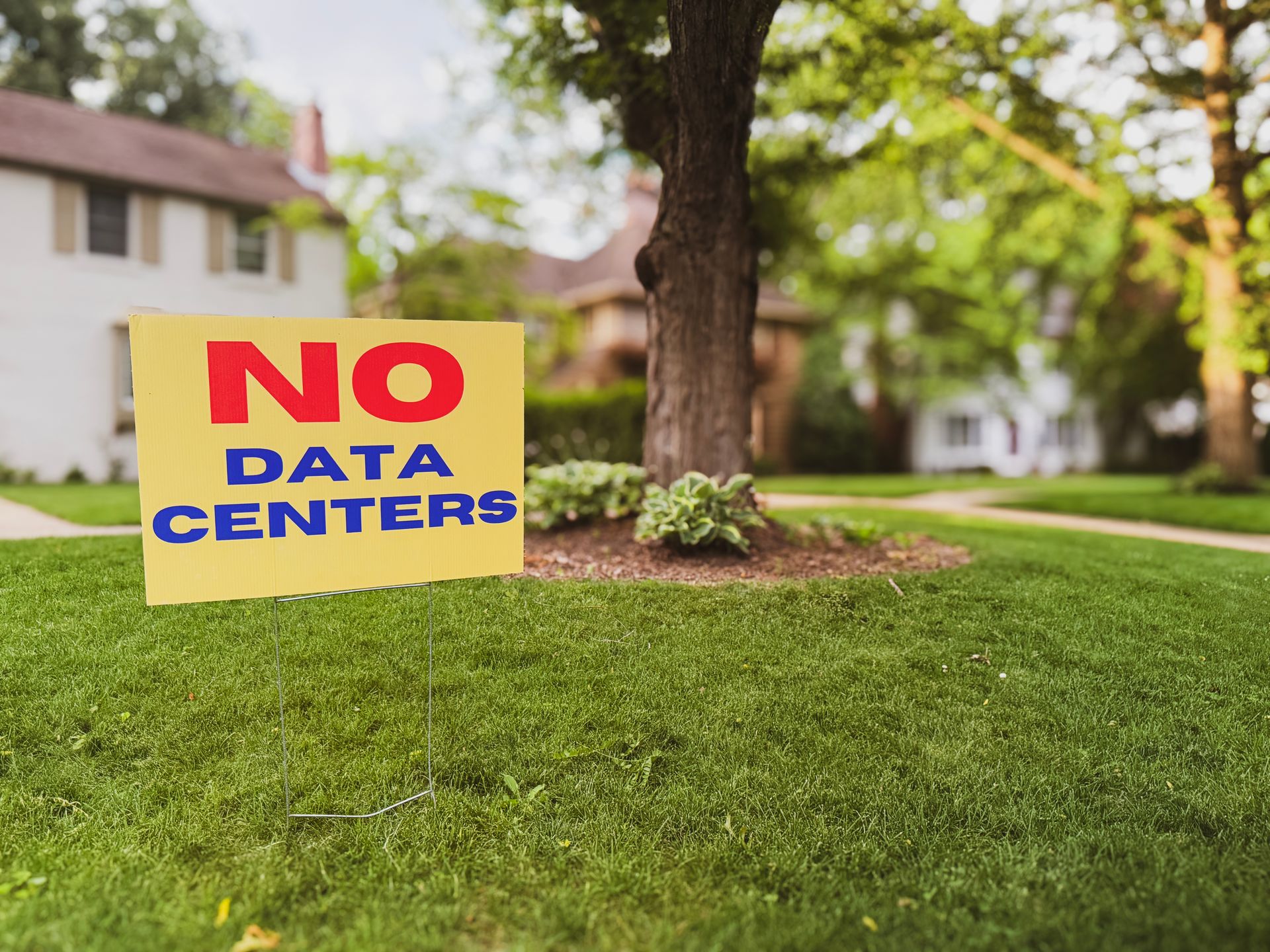
Labor Day traditionally means the start of political campaign season.

PitchBook’s Q2 2026 data confirms what climate tech investors value: affordability, reliability, resilience and energy independence. Make those benefits your message.
Align marketing and sales around a clear message that helps risk-averse customers understand your complex technology and make the case for change.
America Connects is the data center industry's answer to entrenched public opposition. Before the campaign expands, here's some unsolicited advice.
Climate and deep tech companies sell optimism. Learn why a dark website can make investors and customers hesitate before they read a word.
Venture capital is more concentrated than ever. Learn why investor attention has become scarce and how it changes the way investors review pitch decks.