Is Your Company Ready To Compete For Cleantech Funding?

Michael Grossman • December 1, 2020


The Battle for Cleantech Funding


A recent spate of stories in green media suggests a second climate funding boom is in the offing for startups in the cleantech sector. It’s a nice change of pace after funding dried up for almost a decade after the first wave of cleantech investment in the aughts.

Although the curve for cleantech companies might not be as steep in the coming decade for reasons that run the spectrum from public opinion shifting on man-made climate change to maturing technologies, this cluster is still a harder sell for investors.


Cleantech Investing Is Still Risky


While times change, investing fundamentals about risk remain the same. The cleantech/climate tech industry is projected to be worth $4.3 trillion by 2030 , which is more than any other sector. But it’s still a very different beast than software companies, where capital costs are practically nonexistent and startups can create a minimum viable product (MVO) in months. In cleantech, it can take 7 to 10 years to go from proof of concept to a scalable product with a reasonable profit margin.

When the prospect of positive cash flow is dubious and many years away, the stakes for an investor are high. Traditional venture capital firms often steer clear of the cleantech industry because they see the risk of failure as too high to justify. In fact, MIT even published a post-mortem on the cleantech industry in 2016 arguing venture capital simply doesn’t make sense in energy. Ouch!


What’s Driving The Carbon-Free Second Act?


While the enthusiasm of the early 2000s, inspired by Al Gore’s book and documentary, An Inconvenient Truth, has long since dissipated, there are signs of a re-emergence. Philanthropists, family foundations, and accelerators are stepping in to fill a void, and donations toward climate change mitigation have doubled since 2015. Some of those funds are getting funneled into supporting cleantech startups.

Living in the Pacific Northwest, I’m most familiar with the corridor of funds and foundations that run from the Bay Area to Vancouver, B.C., but similar clusters also dot the landscape in both Boston and Chicago where cleantech hubs already existed.

Attracting venture funding isn’t easy. You’ve got to make a credible business case because funds are limited, competition is tough, and only companies that are well-prepared stand a chance.


7 Questions to Ask


Regardless of whether the cohort model, philanthropic funding, or venture capital is right for your climate tech startup, there are seven questions you need to successfully answer before pitching your company to investors. The answers to all of these feed into your overall brand strategy, market positioning, and revenue growth potential.

If you’re unsure what kind of funding best suits your need, I highly recommend you take some time to read a tutorial on different kinds of investing so you don’t burn up your limited time and capital.


1. What is your unique value proposition?

You need to offer something that differs from existing technologies in the market. Understand your competition and be able to explain how and why your offering is unique. Commodity products don’t attract venture capital.

2. What problem are you solving?

If you can’t point to a problem that needs solving, you have a science project, not a company. Being unique and creative is not enough. Who are the people facing this problem? Is it a true pain point for them or a minor inconvenience? What’s preventing a solution?

3. Will people pay to solve the problem?

Unless the customer is motivated to solve the problem, there is no market for what you are offering. This is where urgency comes in. The more urgent the need, the more likely the customer will be inclined to pay to have their problem disappear. If you spell out the value your solution provides, you’ve also got a starting point for pricing.

4. Who is your customer?

Hint: it isn’t everyone or even every company in the industry you’re targeting. The more precisely you can describe your ideal first customer, the better. Just picture one customer who needs your product and explain exactly how it will benefit them. Find more customers like them, and you have a promising business proposition.

5. What is your initial market and how large is it?

Although you may have grand visions of how your product can benefit a dozen separate industries or applications, this is not the time to indulge those fantasies. You need to pick one market and research it thoroughly. Understand the market size, the key players, and the growth potential.

6. What is a realistic ask from a funder?

You need to know how funding works to determine how much money to request and what to offer in return. Although philanthropic investors are sympathetic and want to help, they aren’t giving away handouts. They won’t fund a company unless they see a path to getting a reasonable return on investment (ROI). The funders aren’t being greedy—even philanthropies need sufficient ROI to grow and fund more startups. How can you convince them that the risk/reward equation tips in their favor?

7. How will you survive the Valley of Death?

You need a long-term plan to bridge the so-called Valley of Death and translate your promising idea into a marketable product. How will you spend the money from this initial investment? How will you bring in your next round of money? At what point will revenue be able to offset expenses? Will you be returning in a year or two with another request to fund the same R&D projects or will your business have made progress that will attract additional funding?

All Details Make Jack a Dull Boy

One of the most discordant notes a startup can hit is D sharp, the “D” in this case standing for details, dull, and deadly.

When engineers and scientists communicate with each other, they typically default to how their invention works or what it does. And for other scientists and engineers, distinguishing details are the coin of the realm.

Not so with investors, especially in the cleantech sector. They are there because they want their money to do good while doing well. If you’ve hooked them on the business and environmental rationales, they’ll ask follow up questions or consult trusted scientists and engineers in their own circle to review your assumptions. Leave the equations at home along with your pocket protector.


Refine Your Pitch, Find Your Audience

Once you’ve formulated comprehensive answers to the questions above, you need to distill them down into tightly structured pitches.

Memorize three different pitches lasting two, five, and ten minutes. Why? Because like any showman, you have to be able to read your audience. You should be able to cover your main points in two minutes; the rest depends on the time you are allotted and the number of presentations an investor is asked to review at one sitting.

Over the years, I’ve reminded countless political candidates and cleantech founders that Lincoln’s Gettysburg Address was only 273 spoken words. Unless you are saying something more profound, why do you need more than that to communicate an idea?

Focus on the “why” behind your story and appeal to the mutual desire to solve an urgent need.


Research the Funders

 
How do you find potential funders?

Look for those with a track record of helping companies in your sector, be that transportation, construction, energy, food, water, or the circular economy. Hint: if the organization’s brand image resonates with you, that’s a good sign.

I’m particularly bullish on organizations that providing hands-on training to scientists and engineers on pitching a compelling business case to funders and connecting them with funding opportunities. Here are a few to consider.

    Elemental Excelerator in Oakland, CA boasts a portfolio of over 100 companies. It welcomed its ninth cohort in October 2020, a group of 19 startups drawn from 800 applicants.

    Greentown Labs in Boston calls itself the largest climate tech startup incubator in North America. It has raised over $1 billion in funding and supported over 280 startups with a survival rate of 88%. Instead of taking equity, the incubator charges monthly fees to members for lab and office space.

    Clean Energy Trust in Chicago supports cleantech startups in the Midwest and has invested in 35 companies since 2014. Two-thirds of the companies in its portfolio are generating revenues.

    Cascadia CleanTech Accelerator , based in Seattle, offers a 15-week business accelerator program. Participants receive mentorship and access to funding opportunities.

    Cleantech Open , headquartered in Los Angeles, is a cleantech accelerator with hubs in six regional locations throughout the US.

    Vertue Lab , based in Portland, OR, which works in conjunction with Washington’s CleanTech Alliance on the Cascadia CleanTech Accelerator, also runs a philanthropically supported climate impact fund.

Practice, Prepare, Repeat

You have a compelling story and solid data to back it up. You have researched funders and found one or more that are accepting pitches. One last piece of advice: persistence pays. I’ve never heard of a company founder making a single pitch who was then deluged with dollars.

The pitch is part of the process of building relationships and trust. Going back to the beginning of this piece, before an investor is going to blindly throw money on a risky bet that might not pay off for a decade, there will be plenty of probing on their part. Think of it as your annual visit to the doctor. Investors want to see your vitals over a period of time because one data point doesn’t tell a story.

So keep your cholesterol and blood sugar down, and exercise those pitch muscles every day.

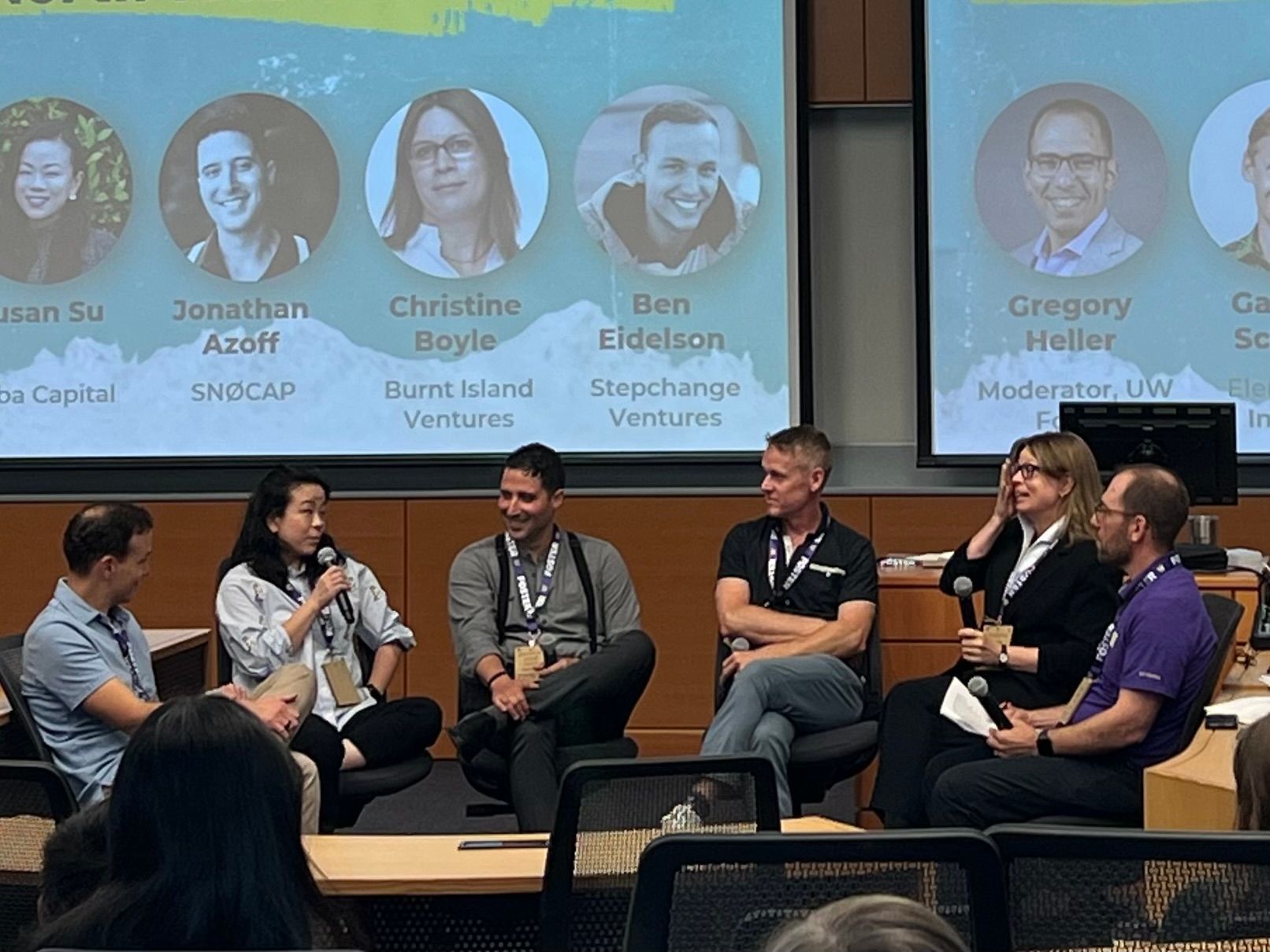
Panel discussion at the 2026 American Clean Power Conference
By Michael Grossman April 6, 2026
Why clean energy projects fail permitting in 2026—and what developers must change: early outreach, local messengers, and digital campaigns that define the fight before opposition does.
Rural communities are pushing back against clean energy projects.
By Michael Grossman March 30, 2026
Denmark leads on climate—but even there, utility-scale solar is facing backlash. The community fault lines around clean energy projects worldwide can be overcome.
By Michael Grossman March 26, 2026
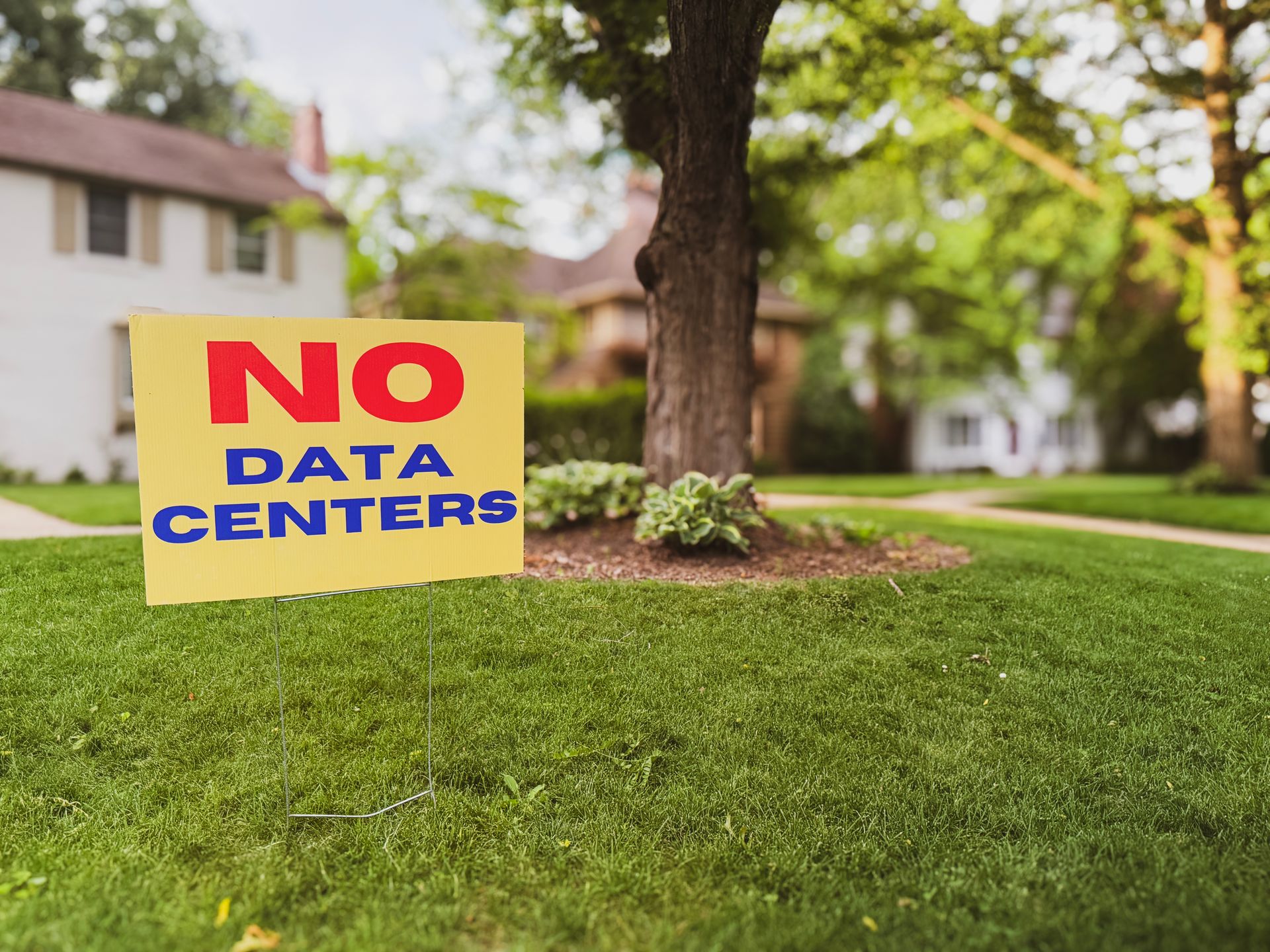
Clean energy developers do not lose projects because their technology fails. They lose projects because they misunderstand how decisions get made in the communities where those projects are proposed. If you spend enough time around project development, you start to see the same pattern. A site pencils. The resource is there. Interconnection works. Capital is lined up. Then the project enters the public process and something shifts. Opposition forms. Local officials hesitate. The project stalls or disappears. That outcome is not rare. Roughly one out of every three large clean energy projects in the United States never reaches construction . At the same time, the environment around these projects is getting harder. Research from the Sabin Center for Climate Change Law at Columbia University tracks hundreds of renewable energy projects across dozens of states facing organized opposition, along with a growing number of local laws restricting development. Across the country, local resistance is no longer episodic. It is structural. Most developers respond by trying to improve how they explain their projects. That is not where the problem sits. The most common messaging mistake clean energy developers make is this: They treat communication as explanation when it is actually coalition building. The Illusion Of Stakeholder Engagement Developers often approach communication by identifying “stakeholders” and building a plan to engage them. The list is familiar. Elected officials, regulators, adjacent landowners, business groups. Those people matter, but they are not the community. Communities are not organized through formal roles. They are organized through trust . Influence sits with people who do not appear on stakeholder maps. A pastor, a co-op manager, a respected farmer, a small business owner. These are the people others listen to when they are deciding what a project means. When engagement is limited to formal stakeholders, developers miss the informal networks where opinions actually form. That gap is where opposition gains ground. Developers Try To Be The Messenger Even when developers engage early, they often assume they should be the ones delivering the message. They have the data. They understand the project. They can explain the benefits. That logic makes sense internally. It is less effective externally. People trust those who share their lived experience . A developer entering from outside the community is asking for trust before it exists. A local voice does not need to make that same ask. This is not a communications nuance. It is the difference between being heard and being discounted. Projects that move forward tend to have credible local voices who can explain the project in terms that make sense to their neighbors. Projects that fail often rely on the developer to carry that burden alone. What is actually at stake These dynamics are easy to underestimate because they are not reflected in financial models. A utility-scale wind or solar project in the 50 to 100 megawatt range typically requires $75 million to $200 million in upfront capital, depending on technology, location, and interconnection costs. Over a 20 to 30 year lifespan, those projects can generate hundreds of millions of dollars in contracted revenue, particularly when backed by long-term power purchase agreements. When a project fails at the permitting stage, that capital is not redeployed cleanly. Time is lost. Development costs are written off. Market windows close. This is not a marginal issue. It is a core risk to the business model. The New Pressure: Data Centers The stakes are rising because demand is rising. The rapid growth of artificial intelligence and cloud computing is driving a surge in data center development across the United States. These facilities require enormous and continuous electricity loads. Recent analysis from Pew Research Center notes that data center electricity consumption in the U.S. is expected to increase significantly as AI adoption expands, placing new pressure on regional grids. At the same time, research from Columbia Business School highlights a growing race to secure power for these facilities, with developers competing for access to clean and reliable electricity. Additional analysis from Environmental and Energy Study Institute warns that data center demand is already reshaping grid planning and could complicate climate goals if new supply does not come online fast enough. This creates a collision. On one side, data center developers need large volumes of electricity, increasingly from low-carbon sources. On the other, local opposition is making it harder to build the very projects required to meet that demand. The result is a tightening constraint on both infrastructure and timelines. Coalition Building As A Development Function In this environment, coalition building is not a communications add-on. It is a core development function. Projects that succeed tend to follow a different sequence. They identify credible local voices early. They invest time in understanding how the project intersects with local concerns. They allow the community to shape how the project is discussed rather than introducing a fully formed narrative late in the process. This work often happens before a project is publicly announced. It rarely appears in investor updates. It is difficult to quantify. It is also one of the clearest predictors of whether a project moves forward. A Different Way To Think About Messaging If you treat messaging as explanation, your goal is clarity. You want people to understand what the project is and why it matters. If you treat messaging as coalition building, your goal is different. You are working to ensure that when the project becomes public, there are already trusted voices within the community who understand it, can speak to it, and see a place for it. That shift changes everything. It changes who speaks. It changes when conversations begin. It changes how opposition is received. The Broader Implication The clean energy transition is often framed as a technological and financial challenge. Those elements matter. Progress on both has been significant. At the same time, the growing number of local restrictions, the scale of organized opposition, and the surge in electricity demand from data centers point to a different constraint. The limiting factor is not always whether a project can be built. It is whether a community is prepared to accept it. Developers who recognize that early and build coalitions accordingly get projects built. Developers who do not often find themselves trying to explain a project after the decision has already been made.
By Michael Grossman March 23, 2026
AI produces familiar marketing based on what’s already worked. Cleantech companies need messaging that drives adoption, not repetition.
By the time a clean energy project has a public hearing, opinions have hardened.
By Michael Grossman March 18, 2026
Learn why many clean energy projects fail before construction. Local opposition, permitting risk, and public narrative shape outcomes more than technology.
By Michael Grossman March 13, 2026
The Quiet Crisis in Clean Energy Development The United States is experiencing a permitting crisis for renewable energy projects. Between 2018 and 2023, roughly 30% of utility-scale wind and solar projects were canceled during the siting process, often because of local opposition or zoning restrictions. At the same time, opposition is spreading rapidly across the country. Researchers tracking renewable project conflicts have documented: • 498 contested renewable projects across 49 states • 459 counties and municipalities with severe restrictions on renewable development In other words, the challenge facing clean energy deployment is not primarily technological. It is political and social. When a Wind Project Dies Last week, a county commission in Washington State placed a moratorium on new wind energy development. That decision effectively halted the Harvest Hills Wind Project, a project proposed by Vestas, one of the most experienced wind companies in the world. The turbines themselves were not controversial from an engineering standpoint. Wind power is now one of the most mature energy technologies in the global power system. Yet the project still collapsed. The reason lies in the way public opinion forms around infrastructure projects. The New Reality of Local Politics Developers now operate in a communications environment where information spreads instantly and credibility is fragmented. Anyone with a social media account can claim expertise. Algorithms amplify outrage. And misinformation circulates faster than technical explanations. Even claims that wind turbines cause cancer — a theory repeatedly debunked by medical researchers — continue to appear in local debates. Once that narrative spreads within a community, the formal permitting process often becomes the stage for a conflict that has already been decided informally. Why the Old Engagement Model Fails The traditional developer playbook looks transparent on paper: 1. Announce the project 2. Launch a website with a project overview and FAQ 3. Invite residents to public meetings But when residents encounter the project for the first time through zoning notices or political social media posts, the project feels imposed rather than understood. By the time formal stakeholder engagement begins, the conversation often starts from mistrust. Farmers Understand the Problem Most wind and solar projects are located in rural areas. Farmers in those communities know something developers sometimes overlook: You prepare the soil before planting the seed. A farmer who plants before the soil is ready wastes the crop. Community engagement works the same way. If developers wait until a project is announced to begin outreach, the ground is already hardened. Grassroots Outreach Is Cheap Insurance Large energy projects often cost hundreds of millions of dollars, yet communications budgets for those projects are frequently minimal. True grassroots outreach typically costs less than one percent of project value, yet it can determine whether the project survives local politics. That outreach must reach residents where they already gather online: • Pre-roll ads on YouTube • Facebook and Instagram • Twitter/X (yes, even Twitter, because it's still a home for political junkies) • Streaming audio like Spotify and Pandora These platforms allow developers to communicate long before the permitting process begins. Projects Are About People Most renewable project websites emphasize infrastructure. Turbine height. Generation capacity. Interconnection details. Tax base. Those facts matter, but they rarely build trust. Communities want to know something simpler: How does this benefit me? Who in our community supports this? In rural areas, credibility travels through relationships. Residents trust farmers, business owners, and local leaders far more than corporate statements. A project website dominated by technical diagrams tells one story. A project website featuring community voices tells another. A Model That Worked Washington State’s Clean Fuel Standard faced intense opposition from the oil industry, but the policy ultimately passed because our team built a broad coalition before the final legislative fight began. That coalition included communities environmental campaigns often overlook: timber workers, minority businesses, and farmers, who were often the target of oil industry hysterics about gas prices. We spent months educating those communities before asking them to take action. When the opposition campaign intensified, the coalition already existed. The Future of Project Development Clean energy developers have historically thought of themselves as engineering organizations. In today’s political environment, they must also think like community organizers. That means: • Beginning outreach before project announcements • Engaging entire communities, not just formal stakeholders • Communicating through digital channels where residents already gather • Elevating trusted local voices The energy transition depends on infrastructure. But infrastructure ultimately depends on trust.
Cleantech websites shouldn't require a map to find the treasure.
By Michael Grossman March 12, 2026
If visitors can’t tell who your cleantech solution is for within seconds, they leave. Learn how clearer messaging turns your website into a recognition tool.
If you want your content to be king, consistency in posting is queen.
By Michael Grossman March 3, 2026
Most cleantech startups treat content like an afterthought. Here’s why a strategic LinkedIn and email content plan builds credibility with investors and partners.
By Michael Grossman February 25, 2026
A brand is not your logo. It’s not your color palette. It’s not your typography. It’s not your tagline. A brand is your voice and your story. The most beautifully designed logo in the world is irrelevant if there isn’t a narrative beneath it—one that carries meaning across platforms, resonates with a specific audience, and communicates why your company exists. In cleantech, this distinction matters more than founders often realize. Because when your product is complex, technical, and capital-intensive, your brand becomes the bridge between your science and your market. A Logo Without Meaning Is Just a Shape Many early-stage companies invest in visual identity before investing in narrative clarity, as if you aren’t a real company until you have a logo, debating colors, symbols, and typography without answering the fundamental questions: • Who do we serve? • What problem do we solve? • Why does it matter now? • Why are we uniquely positioned to win? Creating a logo without answering the above questions first reminds me of the famous line from Alice in Wonderland: “If you don’t know where you’re going, any road will take you there.” Research supports this distinction. According to the Nielsen Norman Group – Brand Credibility and User Perception , users form judgments about credibility based on the clarity of the message and its relevance—not purely on visual design. Visual polish without substance may attract attention, but it does not sustain trust. In other words, aesthetics are secondary to meaning. A logo is a symbol. Symbols only matter when they represent something meaningful. Nike: A Logo That Carries a Story Consider Nike. The swoosh is one of the most recognizable logos in the world. It is minimal. Clean. Uncomplicated. But the swoosh alone does not create emotional impact. Nike has spent decades pairing that logo with a consistent narrative: you can be the best version of yourself. The logo tells athletes—and non-athletes alike—that they can fly. Nike does not lead with rubber compounds or stitching technology. They lead with aspiration. Their campaigns reinforce belief. The logo has remained stable, but the company has invested billions in associating it with performance, resilience, identity, and ambition. Brand equity research confirms why this works. According to McKinsey & Company – The Value of Getting Brand Building Right , companies that consistently reinforce a clear, emotionally resonant brand story outperform peers in long-term growth and pricing power. The swoosh works because the story works. Cleantech Is Technical—But It’s Also Aspirational Cleantech founders sometimes resist branding comparisons to consumer companies. “We’re not selling shoes.” “We’re selling grid storage.” “We’re building carbon capture systems.” That’s true. But you are still selling transformation. You are selling: • Energy resilience • Regulatory compliance • Cost stability • Operational continuity • Emissions reduction • Long-term viability These outcomes are aspirational. Cleantech may be technical, but the impact it delivers is planet-altering. That emotional weight is powerful—if you communicate it clearly. Research from Edelman Trust Barometer 2024 shows that trust in companies is driven heavily by clarity of purpose and perceived long-term commitment—not product features alone. Your brand must communicate belief, not just capability. Generic Taglines Signal Generic Positioning Now consider the tagline problem. Cleantech websites are full of statements like: • “Powering a Sustainable Future.” • “Driving the Transition to Net Zero.” • “Innovating for a Greener Tomorrow.” Each one sounds polished. Mission-driven. Serious. Each one is also interchangeable. If five companies can use the same tagline without modification, it is not a strategic differentiator. It is a category filler. Strong brands communicate specificity. According to Harvard Business Review – Competing on Customer Experience , companies that articulate clearly how they solve a defined customer problem outperform those relying on vague mission-driven messaging. A tagline should drive the audience to an obvious conclusion: This company is one of one. If your tagline does not signal: • Who you serve • What you solve • Why it matters • Why you are uniquely positioned Then it is not strengthening your brand. It is simply occupying space. Branding Is Strategic Positioning Branding is not decoration. It is positioning. Positioning answers: • Who this is for • Who this is NOT for • What problem do you solve? • Why can't competitors replicate you? • What belief anchors your work? Without that clarity, your brand defaults to comparison. And comparison often defaults to price. Research from Boston Consulting Group – The Power of Brand in B2B confirms that even in technical B2B industries, strong brands command pricing premiums and reduce perceived risk. Cleantech is no exception. If your brand doesn’t signal differentiation, the market will evaluate you on cost. That is a race you do not want to run. Voice Is the Core of Brand Consistency If branding is more than a logo, what defines it? Voice! Voice shows up in: • Website copy • Investor decks • Sales sheets • LinkedIn posts • White papers • Conference presentations If your voice changes across platforms, your brand fractures. If your executive team describes the company differently from your sales team, your brand weakens. Branding is a narrative discipline. Nike’s swoosh works because the story is reinforced everywhere. Your cleantech company does not need a billion-dollar ad budget. But it does need message consistency across platforms. Consistency builds familiarity. Familiarity builds trust. Trust accelerates decisions. Your Brand Should Make the Audience the Hero One of the most common branding mistakes in cleantech is positioning the company as the hero. “We are saving the planet.” “We are transforming energy.” “We are redefining sustainability.” That sounds ambitious. But it centers the company, not the audience. A stronger brand narrative positions the customer as the hero and your company as the guide. Instead of: “We power a sustainable future.” Consider: “We help industrial operators reduce compliance risk without sacrificing uptime.” Now the buyer sees themselves. Branding must create recognition before admiration. If Your Logo Disappeared Tomorrow, Would Your Story Survive? A useful test: If your logo disappeared tomorrow, would your audience still understand who you serve and why you matter? If the answer is no, your branding is surface-level. A strong brand survives without a visual identity because the story carries it. Nike’s swoosh matters because of decades of narrative reinforcement. Your cleantech brand must stand on narrative clarity first—and design second. Final Thoughts Branding is more than a logo. It is more than a tagline. It is the story that undergirds your visual identity and carries it across every platform. A logo is a symbol. A tagline is a signal. But your brand is the belief that ties them together. Cleantech solves technical problems with planetary implications. That is not small work. Your brand should reflect that scale—not through vague mission language, but through clear positioning and meaningful narrative. The strongest brands do not win because they are the prettiest. They win because they mean something. If your tagline could belong to anyone, it belongs to no one. And if your logo does not represent a defined belief shared with your audience, it is just a shape. Build the story first. Then let the symbol carry it.
SHOW MORE