Does Google Matter for Cleantech Companies?
Michael Grossman • June 10, 2025
For cleantech companies navigating everything from early-stage funding to policy hurdles, it’s tempting to think that visibility online can take a back seat to more “serious” priorities. But here’s a truth you can’t ignore: over 80% of all search traffic still goes through Google. If you’re building a cleantech company and you aren’t thinking about how Google fits into your strategy—from search to visibility to partnerships—you’re leaving opportunity on the table.
In fact, Google isn’t just a gatekeeper of web traffic. It’s an investor, a technology enabler, a storytelling platform, and a backer of the climate tech ecosystem.
Let’s break down the ways Google matters—and how cleantech companies can take advantage.
1. Google Search Is Still the Front Door
Whether an investor hears about you at a pitch event or a policymaker sees you mentioned in a report, they’re likely to do the same thing next: Google you.
Google remains the dominant search engine, with over 80% market share globally. If you don’t show up in relevant search results—if your company doesn’t have visibility for your category, your solution, or even your founder’s name—you’re adding friction to every interaction.
Your website, media coverage, case studies, and content marketing need to be discoverable. And that means building with Google in mind, whether it’s through SEO, structured data, or simply updating your Google Business profile.
2. Google Is Actively Investing in Clean Energy Infrastructure
Google isn’t just helping others go green—it’s putting billions into building data centers that co-locate with renewable energy projects.
According to Canary Media, Google is developing industrial campuses powered by clean energy and backed by $20 billion in investment by 2030. These campuses will pair hyperscale data infrastructure with utility-scale renewables—effectively baking cleantech into the future of digital services.
For startups focused on grid stability, storage, or renewable generation, this means a huge potential partner—not just in mission, but in infrastructure. If you’ve got a scalable clean energy solution, Google might be your next biggest customer.
3. Google for Startups Accelerator: Climate Change
If you’re an early-stage cleantech company, Google offers more than visibility—it offers hands-on help. Their Startups Accelerator: Climate Change program pairs selected startups with technical and business mentors from across Google to tackle their biggest obstacles.
What’s unique is the program’s flexibility. Founders aren’t required to use Google Cloud, and there’s no financial investment or equity exchange. Instead, companies gain access to product teams, UX experts, and cloud infrastructure support.
In a space where capital is hard to come by and technical support is scarce, that’s a big deal.
4. Google Is Building the Cleantech Ecosystem
Through initiatives like Startups for Sustainable Development, Google is actively partnering with founders who are working on impact-focused solutions. This includes clean energy, food systems, circular economy models, and water conservation.
These programs offer more than mentorship—they also include access to funding opportunities, product teams, and global exposure.
It’s not just about visibility. It’s about alignment. Google wants to see companies succeed that can help accelerate sustainability goals at a global scale—and they’re putting their weight behind it.
5. Sustainability Is Core to Google’s Own Mission
Google isn’t new to this space. Its own climate commitments include achieving net-zero emissions across its operations and value chain by 2030. It also aims to run on 24/7 carbon-free energy in every grid where it operates.
That kind of commitment has ripple effects. If your solution helps achieve decarbonization in buildings, energy, or supply chains, you’re aligned with one of the largest and most influential companies on Earth.
So What Should Cleantech Companies Do With Google?
Here’s how to think about Google—beyond just search:
• Optimize for visibility: Your SEO, content, and press strategy should help you show up where it matters.
• Engage in ecosystem programs: Apply to accelerators like Google for Startups: Climate Change.
• Monitor Google’s clean energy strategy: Their infrastructure decisions may create new markets for your technology.
• Collaborate on data and AI: As Google builds AI tools to support sustainability, companies solving climate problems with data have new ways to plug in.
• Think like a storyteller: Google platforms like YouTube are still the dominant spaces for video storytelling. If you’re not using them, your competitors probably are.
Final Thought: Google Isn’t Just a Platform, It’s a Partner
For cleantech companies, Google isn’t just the search engine where people find you. It’s the investor, partner, and amplifier that can put your work in front of the right audience—and plug you into the global effort to decarbonize.
So yes—Google matters. In fact, it might matter more than most cleantech founders realize. Because if your goal is to change the world, it helps to show up where the world is looking.

Climate tech founders using AI for websites and pitch decks may not fully own what it creates. Here’s what to know before you hit Generate.

Selling complex technology takes more than academic rigor. Founders need the relationship skills from high school to win over investors and customers.

When your market has dozens, not thousands, of potential customers, conventional GTM tactics break down. Learn how to market when every prospect matters.

Labor Day traditionally means the start of political campaign season.

PitchBook’s Q2 2026 data confirms what climate tech investors value: affordability, reliability, resilience and energy independence. Make those benefits your message.

Align marketing and sales around a clear message that helps risk-averse customers understand your complex technology and make the case for change.

America Connects is the data center industry's answer to entrenched public opposition. Before the campaign expands, here's some unsolicited advice.

Climate and deep tech companies sell optimism. Learn why a dark website can make investors and customers hesitate before they read a word.
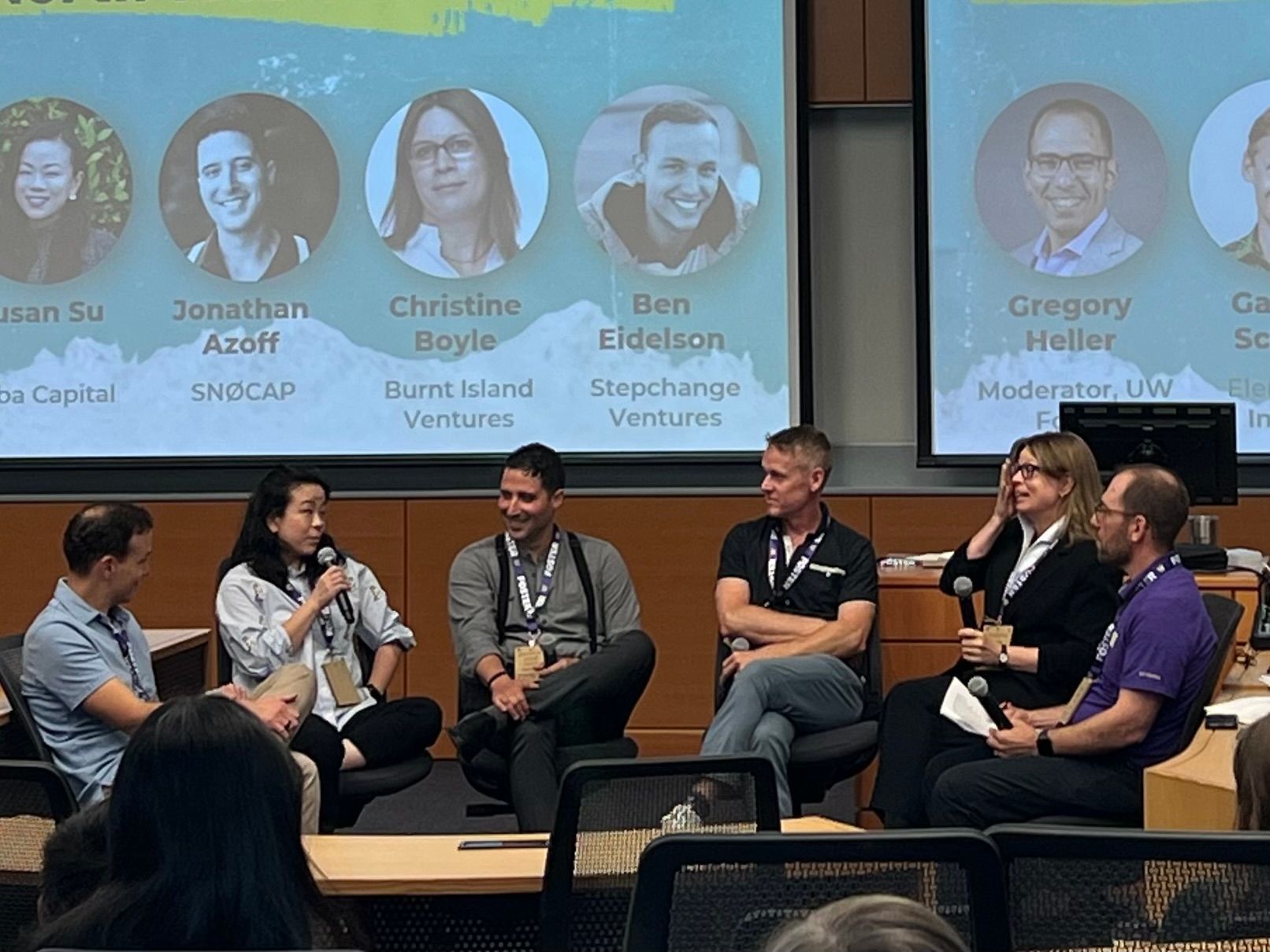
Venture capital is more concentrated than ever. Learn why investor attention has become scarce and how it changes the way investors review pitch decks.