

Why Benefits Trump the Features of Your Clean Technology
Michael Grossman • September 9, 2025
When promoting a clean technology product or service, it’s tempting to lead with the impressive technical specs. Efficiency ratings, proprietary materials, patent-pending algorithms—these features might be what make your solution cutting-edge. But if you're trying to win over customers, investors, or partners, you need to understand one truth: benefits are what sell.
While features describe what your product is, benefits explain why someone should care. And when it comes to messaging in cleantech, where many companies still default to jargon-heavy technical descriptions, the brands that prioritize benefits are the ones that break through.
This blog explains why benefits should be the core of your marketing and sales communications, and how they can help translate your innovative technology into clear, compelling value.
Features vs. Benefits: What’s the Difference?
Before we go any further, let’s define the terms:
• Features are characteristics or technical specifications of a product or service. These might include solar panel efficiency percentages, battery storage capacity, or the use of carbon-negative materials.
• Benefits are the positive outcomes those features create for the customer. These might include lower utility bills, reduced carbon footprint, or improved compliance with new environmental regulations.
As Indeed explains in their breakdown of this concept, “Features highlight what a product can do. Benefits show what it does for the user.”
When you shift your messaging from features to benefits, you’re shifting the focus from you to your customer. And that makes all the difference.
Why Features Don’t Motivate Clean Technology Buyers
Most clean technology buyers—whether homeowners, businesses, or governments—aren’t engineers. They don’t care about the technical nuances of how your product works. They care about outcomes.
1. Features assume technical fluency
Let’s say you lead with a statement like “Our turbines operate at 92% thermal efficiency.” That might be a big deal to your engineers or your R&D team. But to a non-technical buyer, this statement is meaningless unless you also explain what that efficiency does for them.
Does it reduce their operating costs? Help them meet state clean energy goals? Allow them to outpace their competitors? If you don’t connect the dots, they won’t.
2. Features lack emotional relevance
Emotion drives most buying decisions. A benefit like “You’ll cut your energy costs by 30% in the first year” connects far more than “This unit uses a high-performance inverter with MPPT tracking.” One of these makes people feel excited about the result. The other makes them feel like they’re reading a spec sheet.
As OnRampFunds
explains: “Features build credibility, but it’s benefits that inspire action.”
Benefits Help You Stand Out in a Crowded Market
In cleantech, differentiation is key. More companies are entering the space every day, and many of them are offering similar tools and services. If your messaging is focused only on specs, you’re just another technical solution in a sea of technical solutions.
Benefits, on the other hand, are where your unique customer value becomes visible.
1. Benefits highlight relevance
By focusing on how your clean technology improves lives or business outcomes, you become more relatable. Instead of saying, “We offer data-rich environmental sensors,” say, “We help cities detect and reduce air pollution before it affects public health.”
Both may be true—but only one puts the focus where it belongs: on the buyer’s world.
2. Benefits drive your brand story
Marketing isn’t just about stating facts; it’s about storytelling. Benefits help tell a story of transformation—whether that’s a company reducing emissions, a building cutting energy costs, or a municipality meeting federal clean air standards.
As Competitive Intelligence Alliance
puts it: “Features are about the product. Benefits are about the customer experience.”
Why Benefits Are Especially Powerful in the Cleantech Sector
Clean technology is often mission-driven. But mission alone doesn’t close sales. Buyers still need to justify the cost, assess the risk, and see how your product will make their lives easier or better. That’s where benefits come in.
1. Clean tech often comes with higher upfront costs
Many clean technologies offer long-term savings but require more investment up front. To justify that cost, buyers need to clearly understand what they’re getting—not in technical terms, but in tangible outcomes.
By focusing on benefits like lifetime energy savings, tax incentives, or simplified maintenance, you help buyers see the return on investment more clearly.
2. Environmental impact is a benefit—not a feature
Some cleantech companies treat sustainability as a feature. But for many buyers, especially municipalities and enterprises, reduced emissions or ESG compliance are core benefits. They solve a business problem, meet legal requirements, or appeal to values-driven customers.
Frame it that way. Don't just say “Our process is low-emission.” Say, “Our process helps your company meet net-zero goals without disrupting operations.”
How to Translate Features Into Benefits
Turning a feature into a benefit isn’t hard—but it does require practice. The trick is to ask yourself: “So what?”
Here are some examples tailored to the cleantech space:
Feature:
Solar panel with 21.5% efficiency. So What?:
That’s higher than the industry average. Benefit:
Generates more power in less space—ideal for rooftops with limited square footage
Feature:
Air filtration system removes 99.8% of particles. So What?:
That’s a high-performance filter. Benefit:
Helps schools and offices protect occupants from pollution and allergens
Feature:
Smart grid software with AI-powered load balancing. So What?:
Sounds complex. Benefit:
Reduces blackout risk and improves grid reliability during peak usage
Feature:
Carbon capture unit uses proprietary sorbent. So What?:
Nice technical detail. Benefit: Cuts your emissions profile and helps meet regulatory benchmarks faster
When in doubt, use the phrase “which means…” to bridge features and benefits. For example:
“Our battery has a 12-year lifespan, which means you’ll avoid expensive replacements and keep maintenance costs low.”
This technique keeps your messaging grounded in results that matter.
Benefits Also Work Better in Sales Conversations
Your marketing isn’t the only place where benefits matter. Sales conversations—especially in high-consideration B2B clean tech—rely on the same principles.
If your reps are talking about volts, algorithms, and feed-in tariffs without translating those into value, they’re leaving deals on the table. Benefits help create urgency, solve problems, and overcome objections.
And as Vunela
explains using the classic analogy: “People don’t buy a drill. They buy the hole.”
Final Thoughts
Clean technology is vital to the future—but that doesn’t mean people will buy it just because it’s innovative or sustainable. To break through, your message needs to focus on what your product does for the people who buy it.
Features validate. Benefits persuade.
Leading with benefits helps your company:
• Connect with customers emotionally and practically
• Translate technical innovation into real-world value
• Differentiate in a crowded marketplace
• Build a story that people actually want to hear
Whether you’re writing a web page, preparing a sales deck, or pitching to an investor, make sure benefits are front and center. Then support those benefits with features—not the other way around.

Climate tech founders using AI for websites and pitch decks may not fully own what it creates. Here’s what to know before you hit Generate.

Selling complex technology takes more than academic rigor. Founders need the relationship skills from high school to win over investors and customers.

When your market has dozens, not thousands, of potential customers, conventional GTM tactics break down. Learn how to market when every prospect matters.
Labor Day traditionally means the start of political campaign season.

PitchBook’s Q2 2026 data confirms what climate tech investors value: affordability, reliability, resilience and energy independence. Make those benefits your message.

Align marketing and sales around a clear message that helps risk-averse customers understand your complex technology and make the case for change.

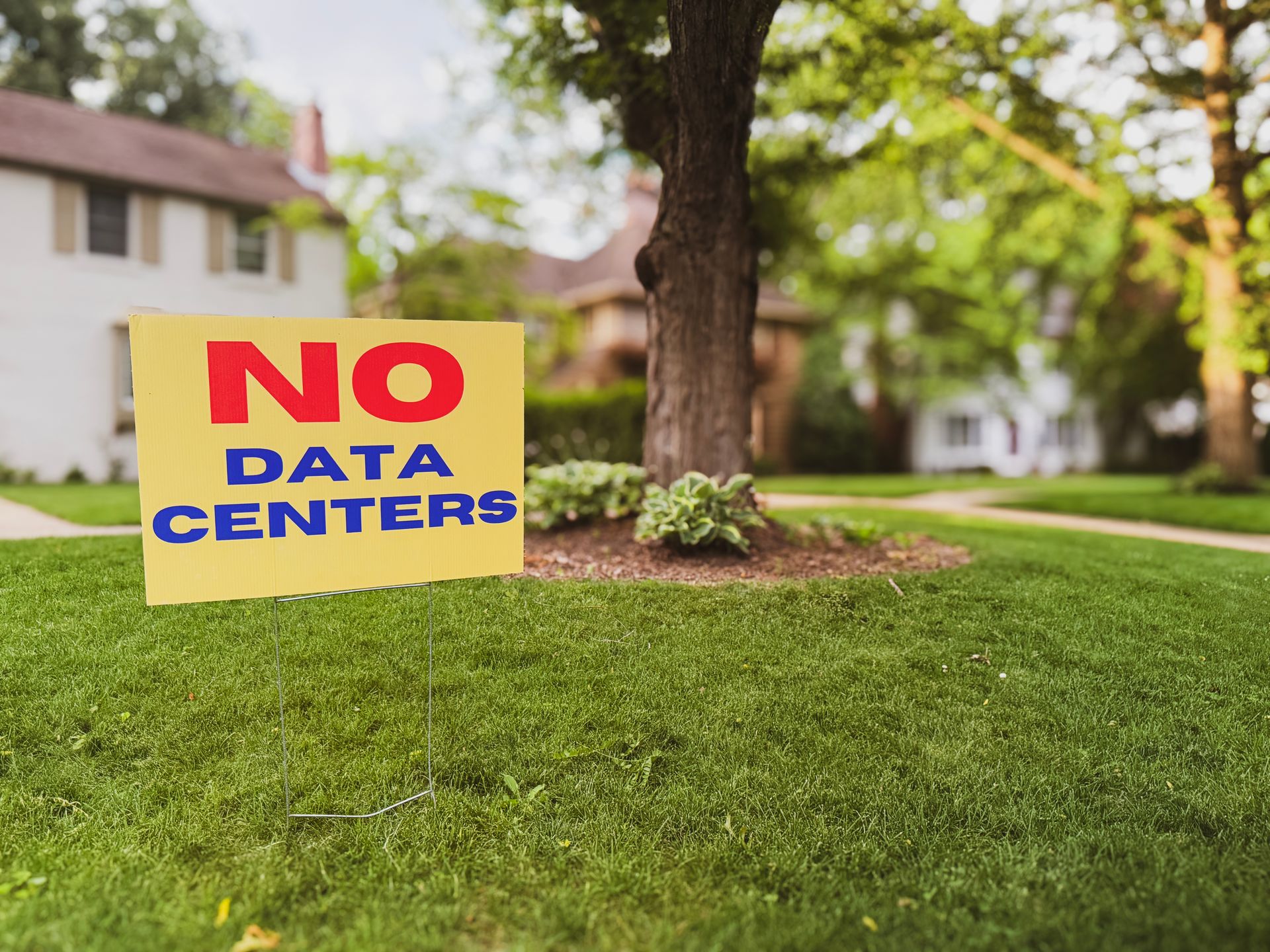
America Connects is the data center industry's answer to entrenched public opposition. Before the campaign expands, here's some unsolicited advice.

Climate and deep tech companies sell optimism. Learn why a dark website can make investors and customers hesitate before they read a word.

Venture capital is more concentrated than ever. Learn why investor attention has become scarce and how it changes the way investors review pitch decks.