Why No One Opens Your Newsletter
Michael Grossman • August 12, 2025
Why No One Opens Your Newsletter
So, your open rates are tanking, and your click-throughs are even worse. You’ve tested sending at different times of day and days of the week, A/B tested call to action buttons, and still—crickets.
The issue might not be your content or timing. Your entire approach to email may be outdated.
The word “newsletter” has become digital clutter. It evokes something impersonal, infrequent, and ultimately irrelevant. In a world where decision-makers are flooded with content, your email has to feel like a one-to-one conversation, not a corporate announcement.
Let’s unpack the three biggest reasons your email isn’t getting read—and how to fix it.
The word “newsletter” sets you up for failure. It sounds long, slow, and not immediately valuable.
Instead, treat every email like a headline. The most important real estate is your subject line—not the CTA, not the header image. Subject lines determine whether your email even gets opened. Subject lines are your introduction—it needs to catch the recipient's attention immediately.
If you wouldn’t click on it, your audience won’t either. Avoid corporate speak, vague intros like “Company Update,” and overused clickbait. Instead, focus on clarity + value + urgency. Example:
• Bad: June Newsletter from GreenTech Solutions
• Good: The $5,000 Mistake You’re Making with Energy Credits
Also, personalize when appropriate—open rates increase when readers feel like the message was written for them, not blasted to everyone.
2. It’s Too Long. Cut It Down.
Overly long emails are less likely to be read in their entirety. And the data backs it up.
The ideal length of an email? Around 200 words or fewer. Emails longer than that experience significantly lower click-through and engagement rates. Best newsletter length = 200 words or ~20 lines for optimal click-through rates.
That means it should take no more than 30 seconds to read aloud. If it takes longer, you’ve already lost them.
People scan. They don’t read. Especially in industries like cleantech where your audience might be investors, engineers, or regulators juggling dozens of priorities.
If they see a wall of text, they skip it. If they see one bold point and a clear action to take, they might click.
Want proof? In a study on digital communication, shorter messages showed a measurable lift in response rate, and the most effective communications were trimmed by 10–20% from the original length.
Make your message visually scannable:
• Use bold subheadings
• Break up text into bullets
• Include one clear call-to-action (not five)
And yes—don’t bury the CTA in paragraph five. Put it right after the reader understands what’s in it for them.
3. You’re Talking About the “What,” Not the “Why”
A long list of updates won’t move the needle.
Too many cleantech companies treat their emails like a press release:
• “We got funding.”
• “We launched our pilot program.”
• “We’re speaking at a conference.”
So what?
The average reader—whether a potential investor, partner, or policymaker—doesn’t care what you did. They care what it means for them. Why should they be excited, alarmed, or intrigued?
Emails should answer WIFM (What’s in it for me?), why it matters, and why now. If you do mention the “what,” it must be paired with a reason to care.
Instead of:
“We received a $1.2M grant from ARPA-E.”
Say:
“ARPA-E just backed our carbon capture tech—and here's how it could reduce 70% of industrial emissions.”
Relevance drives action. Not accomplishments.
Readers respond best to emails built around a clear benefit and purpose (~200 words in length). Stop writing to prove you’re busy. Start writing to show them why your work matters.
Final Thoughts
The death of the newsletter isn’t about format—it’s about mindset.
If your audience isn’t opening your email, it’s not because email doesn’t work. It’s because your email doesn’t respect their time or attention.
Here’s your checklist:
• Don’t call it a newsletter.
• Treat your subject line like a headline.
• Get to the point—fast.
• Make it about the why, not just the what.
• Give one action they can take right now.
Remember, your cleantech company isn’t trying to fill inboxes. You’re trying to change behavior, raise money, and move markets.
That starts with writing emails people want to open.
Climate tech founders using AI for websites and pitch decks may not fully own what it creates. Here’s what to know before you hit Generate.

Selling complex technology takes more than academic rigor. Founders need the relationship skills from high school to win over investors and customers.

When your market has dozens, not thousands, of potential customers, conventional GTM tactics break down. Learn how to market when every prospect matters.
Labor Day traditionally means the start of political campaign season.

PitchBook’s Q2 2026 data confirms what climate tech investors value: affordability, reliability, resilience and energy independence. Make those benefits your message.

Align marketing and sales around a clear message that helps risk-averse customers understand your complex technology and make the case for change.
America Connects is the data center industry's answer to entrenched public opposition. Before the campaign expands, here's some unsolicited advice.
Climate and deep tech companies sell optimism. Learn why a dark website can make investors and customers hesitate before they read a word.
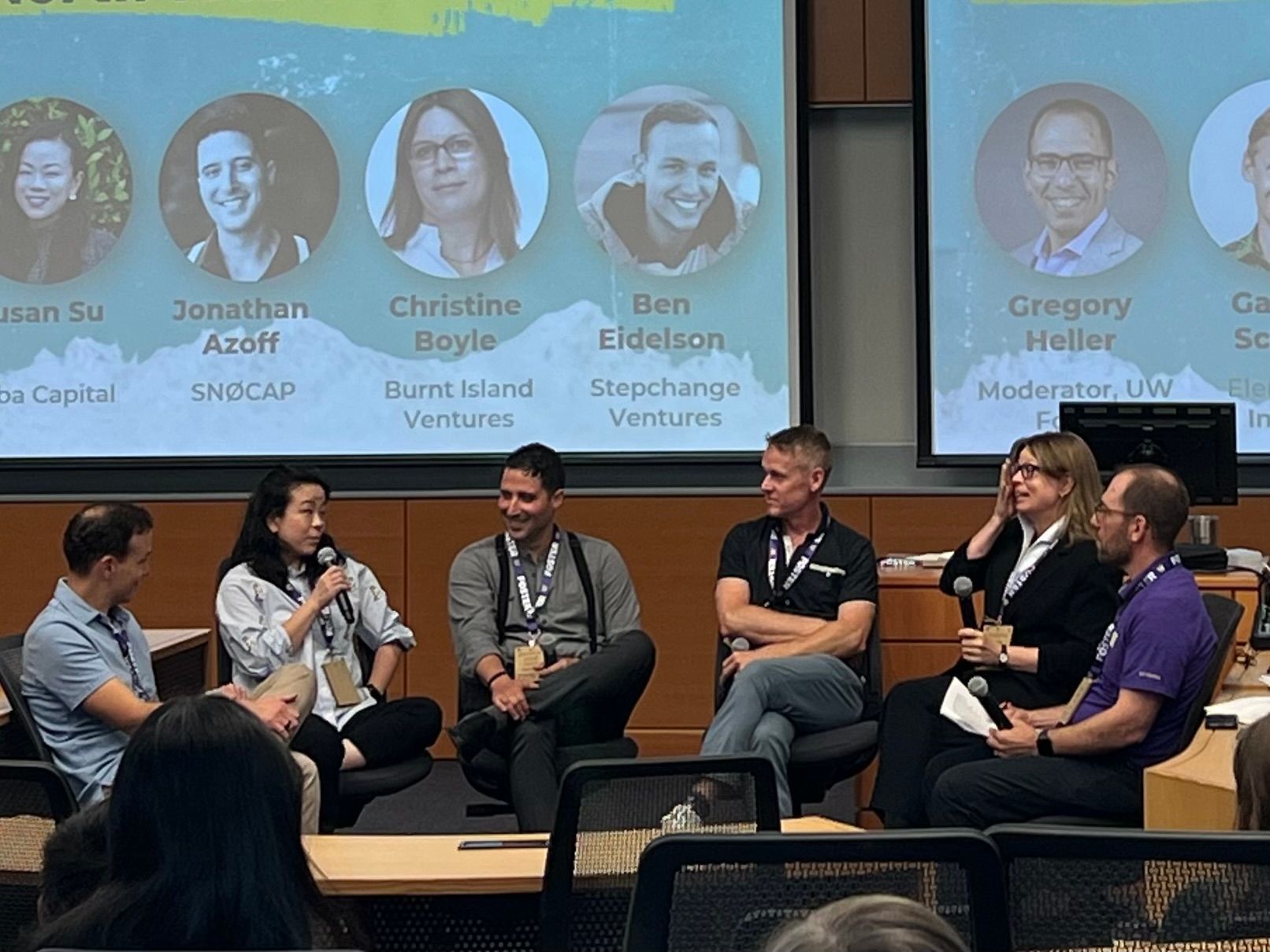
Venture capital is more concentrated than ever. Learn why investor attention has become scarce and how it changes the way investors review pitch decks.